

Views: 0 Author: Site Editor Publish Time: 2026-09-02 Origin: Site


Water damage in a bathroom rarely happens overnight. It usually starts as a slow, hidden leak seeping into the subflooring, rotting wooden joists, and deteriorating drywall behind the tile. Often, the root cause of this structural decay is an improperly fitted shower door seal. When hardware is forced onto heavy glass or sized incorrectly for the gap, the compounding costs range from extensive mold remediation to catastrophic glass failure.
Glass thickness is an absolute metric. Settling for a "close enough" fit compromises the structural integrity of frameless enclosures and completely fails the primary objective of water containment. Whether you are dealing with standard residential panels or heavy commercial doors, precision dictates performance. This guide provides a systematic approach to identifying, evaluating, and sourcing the correct sealing hardware based on exact glass thickness, gap clearance, specific profile requirements, and long-term material durability.
Precision is Non-Negotiable: Using a seal that is even 2mm too large results in slippage and leaks, while a seal 2mm too small risks stress fractures in the glass during installation.
Application Dictates Size: 6mm and 8mm seals dominate standard residential and curved enclosures, whereas 10mm and 12mm seals are engineered for heavy-duty luxury and commercial applications.
Clearance is as Critical as Thickness: A perfectly sized spine will still fail if the bottom fins are too short to bridge the gap or too long, causing door drag and premature wear.
Material Outperforms Design: A perfectly sized seal will fail prematurely if manufactured from low-grade, non-UV-resistant PVC that yellows, breeds mold, and turns brittle.
Sourcing Matters: Partnering with a vetted shower door seal manufacturer ensures strict extrusion tolerances, preventing the micro-gaps common in generic aftermarket replacements.
A high-performing glass shower door seal relies on a dual-durometer construction. This manufacturing process co-extrudes two different grades of plastic into a single profile. The internal grip mechanism, known as the rigid spine, clamps securely onto the glass edge without the need for adhesives. It is typically extruded from a high-Shore-hardness PVC or polycarbonate to maintain structural shape under pressure. Simultaneously, the external fins, or the flexible sweep, are made from a softer, pliable vinyl. These fins work together to deflect water cascading down the glass, redirecting it back into the shower pan while allowing the door to swing freely over uneven tile.
Beyond water retention, a properly fitted seal provides substantial acoustic and thermal insulation. In high-traffic bathrooms or commercial locker rooms, heavy glass doors combined with tight-fitting seals dampen ambient noise and trap steam. This thermal retention improves user comfort and prevents excess moisture from overwhelming the bathroom's ventilation system. By keeping the steam contained within the wet area, you actively protect adjacent painted walls, drywall seams, and wooden cabinetry from long-term humidity damage.
Engineers and installers must balance a strict friction trade-off when selecting these profiles. The rigid spine requires enough compressive force to prevent the seal from dragging off during rapid door swings. However, if the grip is too tight, forcing the plastic onto the glass edge creates microscopic stress points. Over time, temperature fluctuations in the bathroom cause the tempered glass to expand and contract. An over-compressed seal restricts this natural thermal movement, increasing the risk of spontaneous glass shattering. On the job site, we frequently see installers attempt to hammer undersized seals onto thick glass, which almost always results in edge chipping or immediate panel failure.
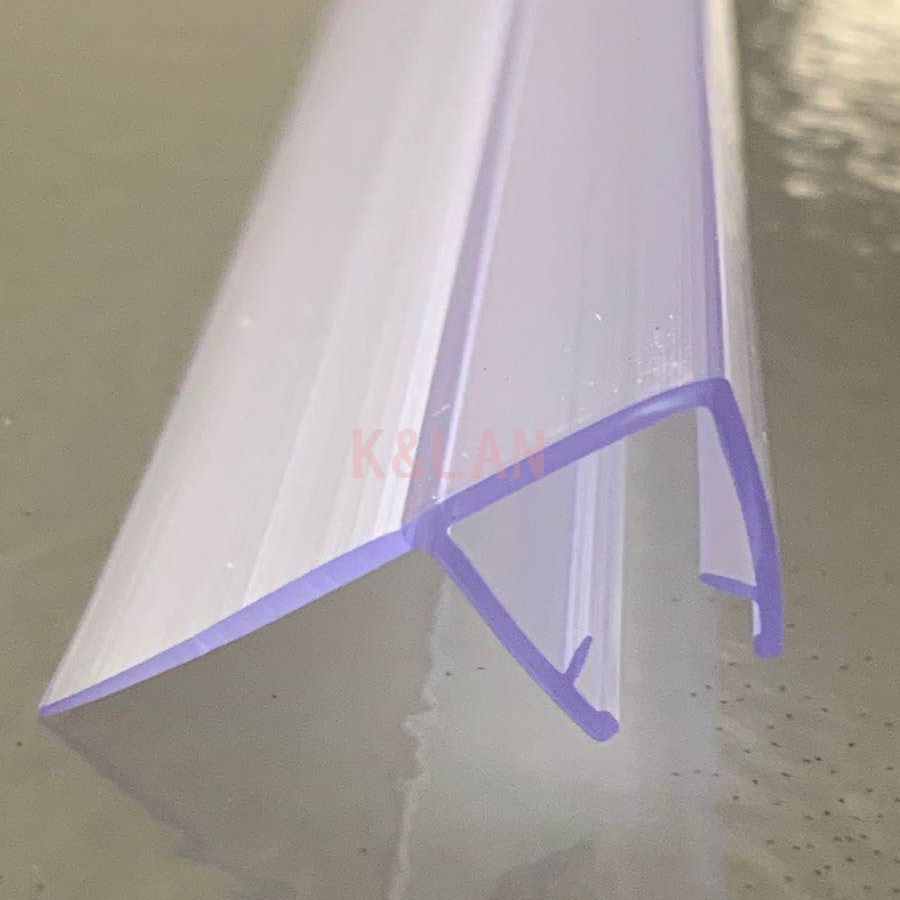
The 6mm shower door seal is the standard solution for entry-level residential enclosures, semi-frameless sliding doors, and quadrant shower cabins. Glass at this thickness weighs approximately 3 pounds per square foot. Because the glass is relatively lightweight, it is prone to slight flexing during operation, especially on taller doors.
When evaluating seals for 6mm glass, the flexibility of the bottom fins is paramount. Stiff, over-engineered bottom sweeps create too much floor resistance. This resistance can easily push a lightweight 6mm door off its track, misalign the hinges, or cause the door to bounce back when closed. Quadrant enclosures often require pre-curved variants. Forcing a straight rigid spine onto a curved radius will cause the plastic channel to buckle, creating wide gaps where water easily escapes.
The primary implementation risk with 6mm profiles involves tearing during installation. If the glass edge is not perfectly clean, the tight channel of the spine will catch on debris. Additionally, manufacturing variances in the glass itself can result in a pane slightly thicker than a true 1/4 inch. Installers must apply careful, even pressure to seat the seal without splitting the PVC channel down the middle.
Upgraded residential bathrooms, standard frameless doors, and large custom curved enclosures typically utilize an 8mm shower door seal. This thickness represents the industry sweet spot, offering a substantial, premium feel without the extreme weight and structural requirements of commercial glass.
Seals designed for 8mm applications require a precise balance of rigid spine construction and soft vinyl fins. The spine must grip firmly enough to handle the momentum of a heavier swinging door, while the sweep must remain pliable enough to glide over pitched shower floors. Because 8mm glass is the most common thickness for modern renovations, these seals are widely available across hardware suppliers.
However, this high availability introduces a significant quality control risk. The market is saturated with cheap, out-of-tolerance aftermarket replacements. Using a poorly extruded 8mm seal often results in micro-gaps along the spine. These gaps allow capillary action to draw water up into the channel and over the shower curb, resulting in mysterious puddles outside the enclosure even when the door is fully closed.
Heavy glass enclosures, luxury residential builds, and boutique hospitality projects demand a 10mm glass door seal. At this thickness, the glass weighs roughly 5 pounds per square foot, transforming a standard shower door into a heavy architectural element that requires serious hardware.
Evaluation at this tier requires inspecting the material of the rigid spine. Standard single-extrusion PVC often lacks the structural integrity to hold onto 10mm glass over years of heavy use. High-quality 10mm seals feature reinforced co-extruded polycarbonate or high-density rigid PVC spines. The sheer weight of the glass creates significant shear force on the bottom sweeps during operation. The fins must be thick enough at the base to resist tearing, but tapered at the ends to clear the threshold without binding.
Implementation requires strict attention to glass tolerances. Tempered glass expands slightly during the heating and cooling phases of manufacturing. Forcing a rigid 10mm seal onto a pane that is fractionally oversized can cause edge chipping. Installers must measure the glass at multiple points before attempting to press-fit heavy-duty seals.
Commercial gyms, high-end hotels, and ultra-heavy custom frameless installations rely on the 12mm shower door seal. This glass weighs upwards of 6 pounds per square foot, requiring heavy-duty structural hinges, reinforced wall blocking, and equally robust sealing hardware.
Maximum rigidity is required for 12mm applications. These profiles often utilize magnetic closures or heavy-duty bulb seals to manage the intense momentum of heavy doors closing against fixed panels. A standard thin fin sweep will flatten, crease, and degrade within months under this extreme weight.
Applying lighter, thinner seals to commercial-weight doors leads to rapid degradation, constant maintenance calls, and inevitable water damage to surrounding commercial flooring. The hardware must match the architectural scale of the glass.
A seal perfectly matched to the glass thickness will still fail if it does not accommodate the physical gap between the door and the surrounding surfaces. Accurate measurement of this void is critical. You must measure the distance from the bottom edge of the glass to the shower tray. Because shower floors are pitched toward the drain at a standard rate of 1/4 inch per foot, this gap often varies significantly from the hinge side to the strike side of the door.
Fin selection directly correlates to this measurement. Standard drip rails work well for uniform gaps under 1/2 inch. Extra-long sweeps are necessary for uneven floors or steep drainage pitches, allowing the flexible vinyl to compress on the high side while still reaching the low side. For extremely tight compression gaps, bulb seals offer a better solution. They crush slightly upon closing to form a watertight barrier without dragging heavily across the tile.
Different areas of a frameless enclosure require specific seal profiles to manage water effectively. Using a bottom sweep on a vertical edge will prevent the door from closing properly.
Bottom Sweeps: These incorporate a rigid channel that snaps onto the bottom of the door, featuring an angled drip rail that deflects water inward and bottom fins that sweep the threshold.
Side Jambs and Overlap Seals: H-jambs and strike seals are used on the vertical edges of inline panels and 90-degree corners. They act as bumpers to prevent glass-on-glass contact and block water from escaping through vertical gaps.
Magnetic Closures: Used primarily on heavy 10mm and 12mm doors, magnetic seals provide a positive stop. When evaluating magnetic closures, assess the pull-strength against ADA compliance requirements to ensure the door remains accessible while still managing the momentum of heavy glass.
Profile Type | Primary Placement | Functionality | Best Application |
|---|---|---|---|
Bottom Sweep with Drip Rail | Bottom edge of moving door | Deflects water inward, seals floor gap | Standard pitched shower pans |
H-Jamb / Strike Seal | Vertical edge of fixed panel | Creates a bumper and vertical water barrier | Inline frameless enclosures |
Magnetic Closure | Vertical meeting edges | Pulls doors closed, creates watertight lock | Heavy 10mm/12mm glass doors |
Bulb Seal | Hinge side or tight bottom gaps | Compresses to fill uneven voids | Out-of-plumb walls or uneven floors |
The structural rigidity and impact resistance of a seal depend heavily on its material composition. Co-extruded PVC is the industry standard, offering a reliable balance of cost and performance. However, for 10mm and 12mm applications, polycarbonate spines provide superior impact resistance and grip strength, preventing the seal from warping under heavy loads.
UV resistance is a critical factor for longevity. Bathrooms are exposed to natural sunlight through skylights and harsh artificial lighting. Non-UV-treated PVC degrades rapidly, yellowing within months and becoming brittle. Micro-abrasions form on the surface of degraded plastic, creating breeding grounds for mold and mildew that cannot be scrubbed away. High-quality seals incorporate UV additives during the extrusion process, ensuring the plastic remains clear and pliable for years.
Visual integration is also increasingly important in modern architectural designs. While ultra-clear seals remain popular for a minimalist look, frosted profiles hide water spots and soap scum effectively. Matte black tinted seals are now frequently specified to seamlessly match dark bathroom hardware, hinges, and fixtures without looking like an aftermarket afterthought.
Relying on a standard tape measure to determine glass thickness often leads to purchasing the wrong hardware. The visual difference between 8mm (5/16 inch) and 10mm (3/8 inch) is minimal to the naked eye, especially when viewing polished, beveled, or frosted glass edges. Guessing the size guarantees a poor fit.
Digital calipers are the only acceptable tool for this measurement. Clamp the calipers directly onto the naked glass edge. A common pitfall on job sites is measuring the old, stretched seal instead of the glass itself. Over time, rigid PVC expands and distorts to accommodate the glass. Measuring the old plastic guarantees an inaccurate reading and a loose fit for the replacement part.
The grip factor of a new seal relies entirely on the cleanliness of the glass. Failing to properly prepare the surface guarantees installation failure. Hard water calcification, thick soap scum, and residue from old adhesives create a microscopic barrier that prevents the rigid spine from seating fully against the glass.
Before installation, the edge must be thoroughly cleaned. Use specialized glass scrapers or fresh razor blades to remove heavy calcium buildup. Follow up with a strong solvent, such as 90% isopropyl alcohol, to strip away body oils and soap residue. The glass must be completely dry before attempting to press the new hardware into place. Any trapped moisture will act as a lubricant, causing the seal to slide off during the first use.
Cutting rigid PVC or polycarbonate requires specific tools. Using scissors or a dull utility knife will splinter the rigid spine, creating sharp edges that scratch the glass and ruin the structural integrity of the channel. Best practices dictate using a fine-tooth hacksaw (32 TPI), PVC ratcheting cutters, or specialized anvil shears to achieve a clean, square cut.
Temperature variables heavily influence installation success. Rigid plastics become stiff and brittle in cold environments. Installing seals in a cold bathroom increases the risk of snapping the spine, especially when working with curved applications. Submerging the seal in warm water for ten minutes prior to installation increases material pliability, allowing the channel to open slightly and slide onto the glass with minimal resistance.
Measure the naked glass edge with digital calipers to confirm exact thickness.
Measure the floor gap at both the hinge and strike sides to determine the required fin length.
Clean the glass edge thoroughly with a razor scraper and isopropyl alcohol.
Cut the new seal to length using anvil shears or a fine-tooth hacksaw.
Warm the seal in hot water to increase pliability.
Press the seal onto the glass starting from one end, working your way down with even pressure.
When sourcing hardware for large-scale hospitality projects, multi-family residential developments, or commercial gyms, the vetting process for the manufacturer is critical. The success of a commercial installation relies heavily on extrusion tolerances. A manufacturer's acceptable variance rate dictates whether hundreds of doors will seal perfectly or leak simultaneously. Strict quality control ensures that the internal channel dimensions remain consistent across thousands of linear feet of product, preventing loose fits on 10mm and 12mm heavy glass.
Customization and OEM capabilities separate premium suppliers from generic distributors. Commercial projects frequently require custom lengths to minimize waste, specific fin angles to accommodate unique floor pitches, or proprietary magnetic polarities for custom hinge setups. The ability to produce tinted profiles, such as matte black or brushed bronze, allows architects to maintain cohesive design languages across large properties without compromising on water containment.
Supply chain reliability is the final evaluation metric. High-volume purchases require predictable lead times and manageable minimum order quantities (MOQs). A reputable manufacturer provides comprehensive warranty support, technical documentation for ADA compliance on magnetic closures, and consistent material grading to ensure long-term performance in demanding commercial environments.
Measure your glass panels using digital calipers to confirm the exact thickness before ordering any replacement parts.
Evaluate the floor pitch and gap clearance at both the hinge and strike sides of the door to select the correct fin length.
Order physical product samples for commercial installations to test the grip and sweep against your specific site conditions.
Specify UV-resistant, co-extruded polycarbonate profiles for any heavy glass doors exceeding 10mm in thickness.
A: No. Sizing up causes the rigid spine to fit loosely against the glass. During normal door operation, the friction from the bottom sweep dragging across the floor will pull the oversized seal right off the glass, completely failing to create a watertight barrier.
A: Remove the old hardware completely. Use digital calipers directly on the naked edge of the glass door to determine the exact thickness. Next, measure the vertical gap between the bottom of the glass and the shower floor to determine the required fin length.
A: The universal fit is a myth. Seals are highly engineered components designed for specific glass thicknesses ranging from 6mm to 12mm and specific gap clearances. A seal designed for a 1/2-inch gap will crush and drag if forced into a 1/4-inch space.
A: While some high-quality flexible PVC seals can adapt to very slight curves, tight quadrant enclosures usually require pre-curved seals. Forcing a straight rigid spine onto a tight radius will cause the plastic to buckle, snap, or permanently deform.
A: A high-quality, UV-treated seal typically lasts 2 to 5 years. The exact timeline depends on daily usage frequency, local water hardness, and the harshness of the bathroom cleaning chemicals used on the enclosure.
A: Never use scissors or standard utility knives, as they will splinter the rigid spine. Use a fine-tooth hacksaw, PVC ratcheting cutters, or specialized tin snips to achieve a clean, square cut without cracking the structural channel.
A: Non-UV-treated PVC degrades when exposed to sunlight, hard water, and harsh chemicals. As the plastic breaks down, it yellows and becomes brittle. This degradation creates micro-abrasions on the surface, which harbor mold spores that cannot be scrubbed away.


