

Views: 0 Author: Site Editor Publish Time: 2026-08-21 Origin: Site


Frequent shower seal replacement carries hidden operational and aesthetic costs. Water leaks compound damage over time, rotting subfloors, damaging drywall, and degrading surrounding fixtures in both residential and high-traffic environments. Premature seal failure presents clearly on the job site: yellowing profiles, brittle fins, aggressive mold proliferation, and a complete loss of structural memory. Inferior material selection, harsh environmental stressors, and neglected hardware maintenance drive this rapid degradation. We must move beyond reactive, frequent replacements that frustrate property owners and maintenance teams alike. Evaluating the material science, structural design, and maintenance realities is necessary to specify a truly long-lasting shower enclosure barrier. By understanding the mechanics of co-extruded plastics and proper door alignment, you can stop water bypass permanently.
Material Composition is Foundational: Co-extruded designs (combining rigid spines with flexible fins) dictate the baseline lifespan and mechanical resilience of the seal.
Environmental Resistance is Non-Negotiable: True longevity requires specific chemical additives to combat UV degradation (yellowing) and biological intrusion (mold).
Application Dictates Specification: High-traffic environments require commercial-grade profiles with higher structural memory compared to standard consumer replacements.
Hardware Synergy is Critical: A durable shower seal relies on properly aligned tracks and hinges; misaligned doors cause uneven friction that destroys even the highest-quality seals.
Maintenance Outweighs Marketing: Even the best seals degrade rapidly under improper installation, lack of routine inspection, or exposure to abrasive, plasticizer-stripping cleaning chemicals.
Daily door operation creates constant friction against thresholds and uneven tiles. Every time the door swings or slides, the bottom sweep drags across abrasive surfaces. Track misalignment and hinge sagging exacerbate this issue significantly. Heavy frameless glass doors, often weighing over eighty pounds, settle over time if wall anchors loosen or hinges shift. Poorly maintained custom shower doors create uneven friction zones where one side of the sweep bears the entire lateral weight of the door against the floor. These concentrated friction zones prematurely shred bottom sweeps, tearing the flexible fins away from the rigid spine.
Continuous compression causes a loss of structural memory. When a door remains closed for extended periods, the flexible fins press against the threshold. Low-quality plastics flatten and fail to spring back to their original shape when the door opens, leaving a permanent gap for water to escape. Hard water scaling introduces another severe mechanical threat. Mineral buildup from calcium and magnesium crystallizes on the glass edge and the sweep itself. These deposits compromise flexibility and act like sandpaper. Every movement of the door grinds these microscopic crystals against the plastic, creating micro-abrasions that tear the fins during standard operation.
To accurately diagnose mechanical wear before it destroys a new sweep, follow these field inspection steps:
Open the shower door to a 90-degree angle and check for vertical plumb using a standard level on the outer glass edge.
Inspect the bottom gap between the glass and the threshold; the gap should be perfectly uniform from the hinge side to the strike side.
Examine the hinges for any exposed gaskets or loose backing plates that indicate the glass has slipped downward.
Run a hand along the tile threshold to identify raised grout lines or uneven tiles that will catch and tear a flexible fin.
Maintenance routines often destroy the very components they aim to clean. Harsh cleaning agents containing ammonia, bleach, or heavy solvents break down the chemical structure of flexible plastics. These chemicals cause plasticizer migration, a process where the softening agents are chemically stripped out of the material matrix. This chemical stripping leads directly to cracking, splitting, and extreme brittleness. Once the plasticizer is gone, the fin shatters under normal friction, rendering the sweep useless.
Porous plastics invite microbial intrusion. Standard extrusion processes often leave microscopic pits on the surface of the plastic. Moisture, soap scum, and dead skin cells become trapped in these micro-cracks, accelerating fungal growth. Mold roots deeply into the porous material, making it impossible to clean off the surface with standard wiping. This structural vulnerability necessitates a specific anti mold shower seal approach to combat biological degradation directly at the material level, utilizing dense extrusion techniques and integrated additives.
Establishing a baseline for evaluation requires looking at specific performance metrics. A high-quality profile must maintain water blockage efficiency, flexibility retention, and aesthetic stability over a 24-to-36-month cycle. Standard seals often fail within six months under heavy use. Evaluating success means measuring how well the fin retains its shape after thousands of compression cycles and how well the material resists discoloration under daily UV and chemical exposure.
Performance Metric | Standard Consumer Seal | High-Performance Durable Seal |
|---|---|---|
Lifespan Expectancy | 6 to 12 months | 24 to 36 months |
Structural Memory | Flattens after continuous compression | Retains shape and spring-back capability |
Chemical Resistance | Brittle after exposure to standard cleaners | Resists plasticizer stripping from pH-neutral cleaners |
Biological Resistance | Highly porous, prone to deep mold rooting | Non-porous surface with antimicrobial additives |
Glass Grip Strength | Slips easily under lateral friction | Maintains strict dimensional tolerance for tight friction-fit |
Fin Deflection | Tears on uneven grout lines | Flexes and conforms to sloped thresholds without tearing |
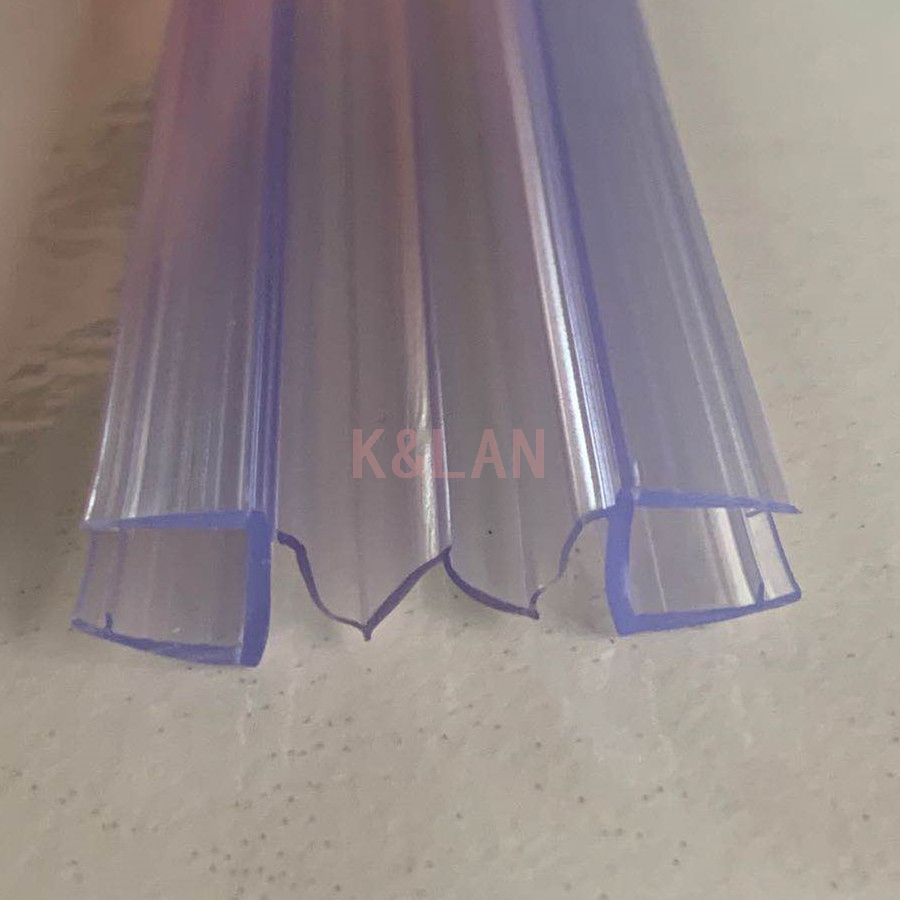
Manufacturing a reliable barrier requires precise engineering. Co-extrusion merges two different material hardness levels into a single, unified profile. A rigid PVC spine, typically rated around 80 Shore D hardness, provides a secure, friction-fit grip on the glass panel. This rigid section must hold tight without adhesives, requiring strict dimensional tolerances during the manufacturing process. Soft, plasticized PVC fins, usually rated around 60 Shore A hardness, extend from this spine to ensure watertight compression against tiles or thresholds. This dual-durometer approach defines a reliable pvc shower seal.
Trade-offs exist within PVC manufacturing. Engineers balance cost-efficiency and ease of cutting against temperature sensitivity. Standard PVC cuts easily with miter shears, making field installation straightforward for glaziers. However, low-grade PVC reacts poorly in extreme steam environments, softening excessively and losing its grip on the glass. High-quality formulations stabilize the polymer to resist thermal distortion while maintaining cutting workability, ensuring the sweep stays firmly attached to the bottom rail even in high-temperature steam showers.
Frameless, heavy-glass applications often require maximum rigidity and impact resistance. Polycarbonate delivers exceptional structural strength, making it highly resistant to shattering or cracking under impact. It grips thick 1/2-inch glass panels aggressively. Polycarbonate profiles maintain their shape perfectly even under high thermal loads, making them a frequent choice for heavy-duty architectural glazing projects.
However, polycarbonate presents limitations regarding flexibility. The fins extruded from polycarbonate lack the soft, yielding nature of plasticized PVC. Polycarbonate fins struggle to conform to uneven tile surfaces or slanted thresholds. If the floor has a slight dip, a heavy grout line variation, or an out-of-plumb slope toward the drain, the rigid fin will not compress into the gap. This lack of deflection allows water bypass. Polycarbonate works best on perfectly level, smooth thresholds like engineered quartz or solid marble curbs.
Silicone handles extreme temperature variations effortlessly. It remains completely flexible in freezing conditions and withstands intense steam without degrading. Silicone possesses a natural resistance to chemical degradation, ignoring the effects of most household cleaners. It does not contain plasticizers that can migrate out, meaning it never becomes brittle over time. This makes it an excellent material for long-term flexibility.
Installation complexities limit silicone's widespread adoption for bottom sweeps. Unlike friction-fit PVC or polycarbonate, silicone lacks the rigidity to grip glass independently. It requires double-sided acrylic tape (like VHB) or liquid silicone adhesives for installation. This introduces curing time, strict surface preparation requirements, and a higher margin for installation error. If the glass edge is not perfectly degreased with isopropyl alcohol before application, the silicone sweep will peel away within weeks under the constant exposure to water and friction.
Bathrooms exposed to natural light through skylights or large frosted windows experience rapid plastic yellowing. Even specific artificial lighting, like high-output halogen bulbs, emits enough UV radiation to damage polymers over time. Photo-oxidation breaks down polymer chains at the molecular level. As the chains break, the material loses its optical clarity and turns a murky yellow or brown. This degradation also destroys the material's tensile strength, making the fins highly susceptible to tearing.
Evaluating the presence and efficacy of UV inhibitors is critical for longevity. Manufacturers must blend stabilizing chemicals, such as hindered amine light stabilizers (HALS) or specific UV absorbers, into the raw plastic pellets before extrusion. An anti UV shower seal integrates these stabilizers to absorb or reflect harmful radiation. This chemical engineering prevents photo-oxidation, ensuring the profile remains transparent and structurally sound despite daily light exposure in brightly lit residential bathrooms.
Surface porosity dictates how easily mold takes hold on bathroom hardware. Smooth, high-density extrusions offer fewer microscopic anchor points for fungal spores. Integrating antimicrobial treatments, such as silver-ion additives, during the extrusion process creates a permanently hostile environment for biological growth. These additives disrupt the cellular walls of mold and mildew on contact, preventing them from colonizing the plastic surface.
You must evaluate manufacturer claims against real-world biological resistance in high-humidity zones. A topical anti-mold spray applied after manufacturing wears off after a few weeks of friction and water exposure. True biological resistance must be baked into the polymer matrix. High-humidity environments, lacking proper exhaust ventilation, will test the limits of any antimicrobial additive, making dense, non-porous material selection the primary defense against black mold and pink mildew buildup.
High-frequency usage environments require upgraded architectural hardware. Hospitality venues, fitness center locker rooms, and high-occupancy rentals subject doors to dozens of cycles daily. Standard consumer profiles flatten and tear under this volume. A commercial shower seal features thicker rigid spines to prevent dislodging during aggressive door operation by guests who may not handle the hardware gently.
Commercial specifications also demand longer fins with superior structural memory. The flexible components use higher-grade plasticizers designed to withstand constant compression without permanent deformation. Identifying the threshold for this upgrade prevents premature failure. If a residential bathroom serves a large family, upgrading to a commercial-grade profile often eliminates the need for annual replacements, providing a much more robust barrier against daily wear and tear.
Water blockage efficiency and fin resilience must survive an initial 6-month stress-test period. During this time, the sweep encounters temperature fluctuations, chemical exposure, and thousands of friction events. Poorly designed fins will show micro-tears at the hinge side within this window, as the hinge side experiences the most complex rotational friction. Water blockage efficiency drops as the fin loses its memory and fails to seal against the threshold.
Standard consumer replacements typically follow a 1-to-2-year cycle before aesthetic or mechanical failure mandates removal. Premium, properly maintained seals demonstrate a 24-to-36-month potential. Reaching this upper limit requires strict adherence to maintenance protocols and perfect initial hardware alignment. The gap between a one-year failure and a three-year lifespan lies entirely in material quality, precise installation, and ongoing environmental management.
Manufacturing tolerances directly impact glass grip and overall functionality. If the rigid spine is extruded even a fraction of a millimeter too wide, it will slip off the glass during operation. If extruded too tight, forcing it onto the glass will cause micro-fractures in the PVC. Strict quality control, utilizing digital calipers and automated optical inspection on the extrusion line, ensures dimensional accuracy. This prevents slippage and subsequent water bypass.
Assessing the consistency of material clarity and fin flexibility across production batches separates premium suppliers from budget extruders. Inconsistent cooling during the extrusion process—specifically in the water bath phase—leads to warped profiles or cloudy plastics. High-end extrusion facilities monitor temperature and pull-rates meticulously to ensure every linear foot of the profile performs identically, providing a reliable product for field installers.
Identifying reliable, engineering-focused suppliers is better than relying on white-labeled, low-grade imports. Transparent suppliers publish their material specifications, detailing the durometer ratings of their co-extruded plastics and the specific UV inhibitors utilized. A reputable shower seal manufacturer understands the chemical limitations of their products and provides accurate environmental use cases for glaziers and architects.
Evaluating warranty terms serves as a proxy for expected lifespan and material confidence. Manufacturers producing highly porous, low-grade PVC rarely offer extended warranties against yellowing or brittleness. Suppliers who stand behind their UV stabilization and antimicrobial integration typically reflect that confidence in their replacement policies and technical documentation, ensuring the end-user receives a product capable of surviving harsh bathroom environments.
Improper measuring and cutting techniques create immediate stress points. Using dull scissors or standard utility knives crushes the rigid spine before cutting it. This crushing action creates micro-tears that propagate under daily friction, splitting the sweep in half within weeks. Professionals use specialized miter shears or fine-tooth hacksaws to achieve clean, stress-free cuts. Additionally, failing to notch the flexible fin on the hinge side causes the plastic to bind against the wall, tearing the fin every time the door opens.
Forcing incorrect profiles onto incompatible glass thicknesses causes immediate spine fractures. Attempting to push a 3/8-inch profile onto 1/2-inch glass compromises the structural integrity of the rigid PVC. A simple replacement can fail rapidly if tracks aren't cleaned or if the door isn't re-aligned prior to installation. Pushing a new sweep over hard water scale left on the glass prevents a secure grip, causing the sweep to slide down and drag heavily on the floor.
To ensure a proper, long-lasting installation, follow these field protocols:
Remove the old sweep and scrape the bottom edge of the glass with a razor blade to remove all hard water scale and soap scum.
Wipe the glass edge thoroughly with isopropyl alcohol to ensure a completely clean, grease-free substrate.
Measure the glass thickness with digital calipers to confirm the exact profile size required.
Cut the new sweep to length using a fine-tooth hacksaw, ensuring the rigid spine is not crushed during the cut.
Notch the flexible fin at a 45-degree angle on the hinge side to prevent binding against the wall or hinge block.
Press the sweep firmly onto the glass, starting from one end and working toward the other to prevent bowing.
Routine inspection checklists help identify early warning signs of mechanical failure. Look for fin stiffness, micro-cracks near the spine, and track buildup before leaks occur. Catching a sagging hinge early prevents the door from crushing the new sweep. Adjusting the hinges restores the proper gap between the glass and the threshold, allowing the fins to sweep smoothly without tearing against the tile.
Proper ventilation reduces the ambient moisture load, preventing biological buildup. Running an exhaust fan during and after use denies mold the sustained humidity it needs to colonize the plastic. Establish a protocol of approved, pH-neutral cleaning solutions. Avoid degrading chemicals like bleach, ammonia, or heavy acidic tile cleaners that strip plasticizers and destroy the structural integrity of the sweep.
Routine wipe-downs prevent mineral deposits and protect your durable shower seal from abrasive damage. Using a squeegee on the glass and wiping the bottom sweep with a microfiber cloth removes hard water before it crystallizes. This simple mechanical action does more to extend the life of the flexible fins than any chemical cleaner available, keeping the plastic soft, pliable, and free of abrasive grit.
A durable shower enclosure barrier is a specific architectural hardware decision. Its longevity relies heavily on co-extruded material quality, integrated UV and mold resistance, precise glass-to-profile matching, and holistic door maintenance. Ignoring hardware alignment or using harsh chemicals will destroy even the most engineered polymers. Base your selection on the exact glass thickness, the environmental stressors present in the room, and the expected traffic volume.
Audit the current shower enclosure for specific failure points, noting whether the previous profile failed due to yellowing, tearing, or mold.
Inspect track alignment and hinge tension to ensure the door operates evenly without dragging on the threshold.
Measure the glass thickness accurately using digital calipers before ordering replacement parts.
Source replacement profiles from a transparent, specialized manufacturer that details their UV and antimicrobial additives.
Implement a pH-neutral cleaning routine and ensure daily wipe-downs to prevent mineral crystallization on the new fins.
A: A high-quality, well-maintained profile should last between 24 and 36 months. Standard consumer-grade seals typically require replacement every 6 to 12 months due to yellowing, brittleness, or fin flattening. Proper hinge alignment and pH-neutral cleaning significantly extend this lifespan.
A: Commercial profiles feature thicker rigid spines for a tighter glass grip and longer, thicker flexible fins made with higher-grade plasticizers. This design provides superior structural memory, allowing the fins to withstand high-frequency compression cycles in gyms or hotels without permanently flattening.
A: They do not permanently prevent all surface buildup, but they heavily resist deep mold rooting. Antimicrobial additives integrated during extrusion create a hostile surface for spores. However, without proper ventilation and routine wipe-downs, soap scum can still accumulate on the surface and harbor mildew.
A: Yellowing is caused by photo-oxidation, where UV light from windows or artificial bulbs breaks down the polymer chains in the plastic. Prevention requires purchasing profiles manufactured with specific UV inhibitors blended into the raw material prior to the extrusion process.
A: You must measure the glass thickness using digital calipers, typically resulting in 1/4", 5/16", 3/8", or 1/2" measurements. Next, measure the gap between the bottom of the glass and the threshold to ensure the flexible fins are long enough to create a watertight barrier without crushing.
A: Yes. Harsh chemicals containing bleach, ammonia, or heavy solvents strip the plasticizers out of the PVC. This chemical reaction removes the material's flexibility, causing it to become brittle, crack, and eventually shatter under normal friction, regardless of its UV resistance.


