

Views: 0 Author: Site Editor Publish Time: 2026-11-24 Origin: Site


Beyond standard friction-fit rubber, enclosure hardware evolution highlights common failure points in legacy seals. Installers and homeowners frequently deal with water leakage, premature discoloration, and doors failing to stay closed under high water pressure. Passive rubber sweeps warp over time. They lose shape and fail to block water. This creates continuous maintenance headaches and potential water damage. You face a distinct challenge balancing watertight integrity with the invisible aesthetic of modern frameless glass designs. Traditional clear plastic seals disrupt clean lines. They yellow quickly and accumulate visible grime. We need a robust, visually cohesive approach to maintain performance and design intent. Magnetic Shower Door Seals serve as the definitive technical upgrade. They bridge the gap between mechanical reliability and visual cohesion. This guide provides a framework for evaluating profiles, finish-matching, and precise installation requirements to ensure a permanent, high-performance solution.
Active Closure Superiority: Unlike passive rubber fins, magnetic seals utilize active attraction to provide a secure, watertight barrier that compensates for minor alignment shifts.
Precision Sizing is Critical: Success relies on exact measurements of glass thickness (6mm–12mm) and the specific gap between panels to ensure magnetic engagement.
Aesthetic Customization: Integrating a black magnetic shower door seal or a white shower door magnetic seal allows for seamless hardware coordination, moving beyond the "cheap" look of standard clear plastic.
Structural Longevity: Beyond waterproofing, these seals act as shock absorbers, protecting frameless glass edges from grinding, chipping, and catastrophic impact.
Traditional shower seals rely entirely on passive friction. A rubber fin drags across a surface to block water. Over time, this constant friction wears down the material. The fin bends, stiffens, and eventually leaves gaps. Water easily escapes through these compromised areas. Passive seals cannot adapt to structural changes. If a heavy glass door sags even one millimeter, a friction seal loses contact.
A Magnetic Shower Seal operates on a completely different physical principle. It uses active magnetic attraction to pull doors together. Continuous magnetic force creates a tight, consistent barrier. This active closure resists high water pressure far better than basic rubber sweeps. Magnets actively seek each other out as the door swings shut. They snap together firmly, leaving no room for water penetration.
These seals feature self-adjusting properties. Bathrooms experience temperature fluctuations and humidity changes. Heavy glass panels shift slightly on hinges over years of use. Magnetic attraction compensates for these minor alignment shifts. The magnetic field spans the small gap between doors. Even if doors drop slightly out of perfect plumb, magnets still engage and secure the enclosure. We see this constantly in older homes where walls settle. The magnetic pull bridges that newly formed gap without requiring a complete door realignment.
High-quality seals utilize a dual-material extrusion process. This manufacturing technique combines two different types of polyvinyl chloride (PVC) into a single profile. The base features a rigid PVC spine. This rigid section grips the glass edge tightly. It prevents the seal from slipping or peeling away during daily operation. The outer section features a flexible PVC channel. This softer channel houses the magnetic strip and provides necessary give.
This dual construction does more than stop water. It acts as a shock absorber. Frameless glass doors are heavy and fragile at their edges. When two glass panels swing toward each other, collision risks are high. Glass-on-glass impact causes chipping, grinding, and sometimes catastrophic shattering.
Magnetic seals prevent this dangerous contact. The flexible channel compresses slightly upon closure. It absorbs the kinetic energy of the swinging door. The rigid spine distributes this force evenly along the glass edge. This cushioning effect protects your investment in expensive custom glass by eliminating hard impacts. Installers rely on this feature to reduce callbacks for chipped glass edges.
Water always follows the path of least resistance. In a shower enclosure, we call this the drip path. High-pressure showerheads spray water directly at door seams. If any clearance exists between panels, water finds its way out. Passive seals leave micro-gaps where water droplets accumulate and run down onto the bathroom floor.
Magnetic bonding eliminates this drip path entirely. When magnets engage, they create a zero-clearance barrier. Flexible PVC lips press tightly against each other. This forms a continuous, watertight seal from the top of the door to the bottom. High-pressure shower spray hits this barrier and deflects back into the tray.
This continuous barrier handles modern, high-flow shower systems effectively. Body jets and rain showerheads generate significant water volume. A standard friction seal cannot contain this volume. The active closure of a magnetic system ensures all water remains inside the wet zone. It keeps the surrounding floor dry and safe.
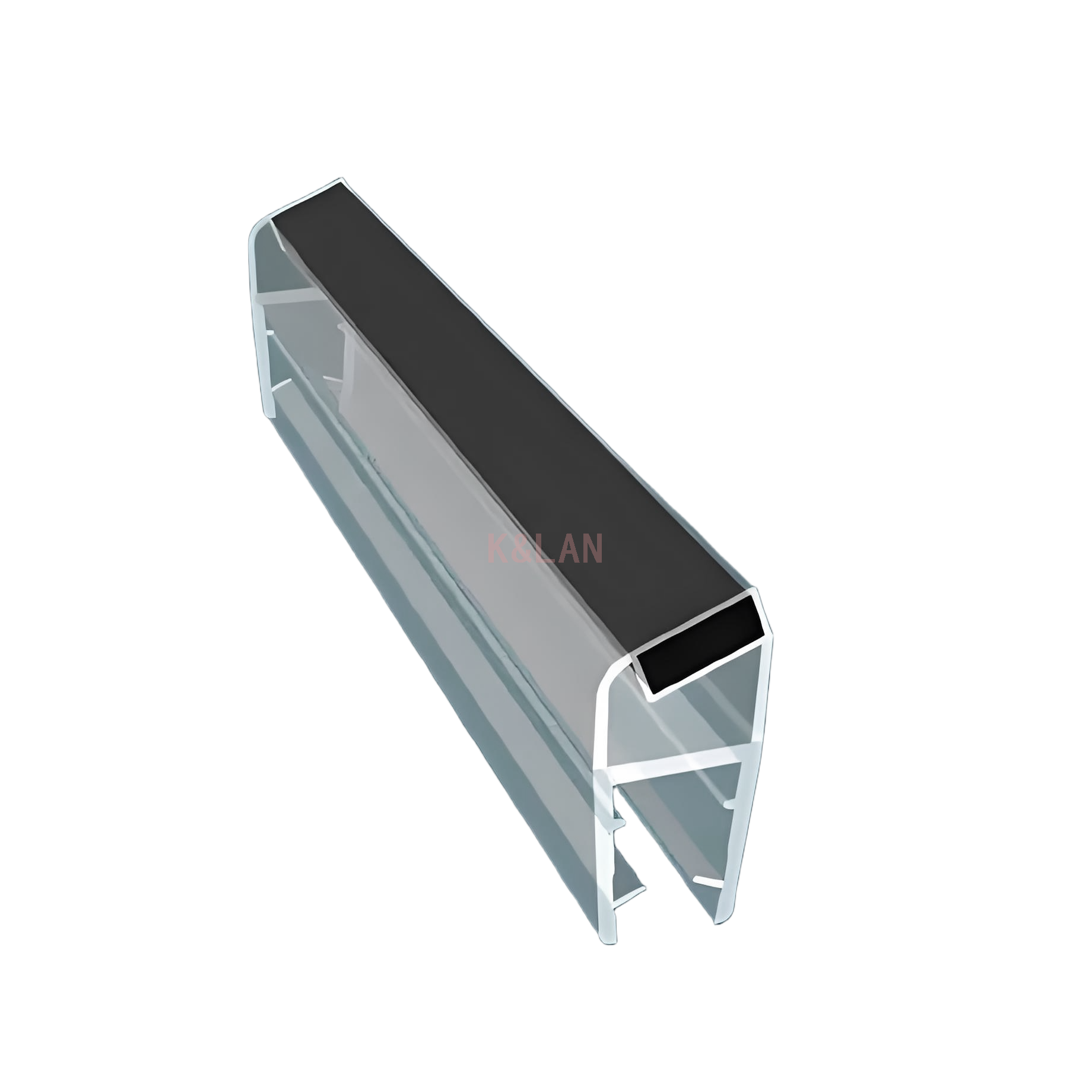
Shower enclosures come in various shapes and configurations. The geometry of your specific setup dictates the type of seal you need. Using the wrong profile guarantees failure. Magnets will not align, and doors will not close properly. You must match the seal geometry to your enclosure design.
We typically work with three primary configurations. The 90-degree setup is common in corner entry showers. Two doors meet at a right angle. The 135-degree setup is standard for neo-angle enclosures. A central door meets fixed side panels at an obtuse angle. The 180-degree setup is used for inline doors. A single door aligns perfectly straight with a fixed glass panel.
Selecting the correct Magnetic Shower Seal Profiles is non-negotiable for proper latching. A 90-degree seal has magnets positioned to attract at a right angle. If you install a 180-degree seal on a 90-degree corner, magnetic poles repel or completely miss each other. Always verify the exact angle of your glass panels before selecting a profile.
Enclosure Angle | Common Application | Seal Profile Requirement | Risk of Incorrect Match |
|---|---|---|---|
90-Degree | Corner entry, square enclosures | Magnets set at 45-degree bevels to meet at a right angle. | Doors will not latch; severe water leakage at the corner. |
135-Degree | Neo-angle, pentagonal trays | Magnets angled specifically for obtuse corner meetings. | Weak magnetic attraction; doors pop open under water pressure. |
180-Degree | Inline doors, alcove showers | Flat, linear magnet alignment for straight-on closure. | Magnets repel if used on angled enclosures; gap remains open. |
Frameless glass doors are manufactured in specific thicknesses. Industry standards are 6mm, 8mm, 10mm, and 12mm. Your seal must match this thickness exactly. The rigid PVC spine is extruded to grip a very specific dimension. There is no one-size-fits-all solution for glass thickness.
Improper sizing carries significant risks. If you force an undersized seal onto thick glass, the rigid spine stretches beyond its capacity. This causes stress fractures in the PVC. The seal eventually splits down the middle and falls off. It also makes installation incredibly difficult and risks scratching the glass surface.
Conversely, oversized seals lead to frequent slippage. If you install a 10mm seal on 8mm glass, the rigid spine cannot grip the edge. The seal slides down the glass every time you open the door. It drags on the floor and quickly degrades. Measure the exact thickness of your glass panel using digital calipers before ordering.
The space between your glass panels is just as important as glass thickness. We call this the door gap. The "Small Gap" design principle dictates achieving the tightest possible fit without inhibiting smooth door movement. A smaller gap looks cleaner and provides stronger magnetic attraction.
Magnets must have enough reach to engage correctly. Most magnetic profiles bridge a gap of 2 to 5 millimeters. If the gap is larger than 5mm, the magnetic field is too weak to pull doors together. If the gap is smaller than 2mm, PVC profiles crush against each other, preventing the door from closing fully.
Measuring this distance requires accuracy. Use digital calipers to measure the exact distance between glass edges when the door is closed. Take measurements at the top, middle, and bottom of the door. Glass panels are rarely perfectly plumb. If the gap varies significantly from top to bottom, adjust the door hinges before installing new seals.
Bathroom design has shifted heavily toward bold, contrasting hardware. Matte black fixtures are incredibly popular. Homeowners install black showerheads, black hinges, and black handles. Traditional clear plastic seals clash terribly with this aesthetic. They look cheap and out of place against premium dark hardware.
Integrating a Black Magnetic Shower Door Seal solves this design problem. These profiles coordinate perfectly with contemporary matte black fixtures and Crittall-style grid frames. They create a seamless, uninterrupted line down the glass edge. Hardware coordination elevates the entire bathroom look, making the enclosure appear custom-built and highly refined.
Black seals offer distinct functional benefits. Clear PVC inevitably degrades in a wet environment. It absorbs minerals from water and reacts to ultraviolet light. This causes severe yellowing and opacity loss. Black seals resist this visible degradation entirely. They hide mineral staining, soap scum buildup, and water spots far better than translucent alternatives. They maintain their original appearance for years.
Minimalist bathroom designs often utilize white fixtures to create a bright, airy environment. White powder-coated frames and white hinges require matching hardware to maintain a clean look. Introducing clear or black seals into an all-white design breaks visual flow and draws unwanted attention to functional hardware.
A White Shower Door Magnetic Seal provides necessary cohesion. It matches white frames perfectly, blending into the background. This creates a unified appearance. The minimalist design intent remains intact, while the mechanical performance of the magnetic closure is fully realized.
White profiles excel in hard-water environments. Hard water leaves white calcium and limescale deposits on every surface. On clear seals, these deposits look like dirty, cloudy streaks. On black seals, they create a stark, chalky contrast. Opaque white profiles hide this buildup effectively. They remain visually appealing even when maintenance is slightly delayed.
Despite the rise of colored hardware, clear seals remain the traditional choice for invisible applications. When installed on completely frameless glass with minimal chrome hardware, clear polycarbonate aims to disappear. It allows the beauty of tile work and glass to take center stage.
Evaluating traditional polycarbonate requires understanding its limitations. Standard clear plastics are highly susceptible to environmental degradation. Bathroom light fixtures and natural sunlight emit UV radiation. Steam and heat accelerate chemical breakdown. This combination causes clear seals to turn yellow, brittle, and opaque over time.
To combat this, select UV-stabilized options. High-quality clear seals are treated with specific chemical inhibitors during the extrusion process. These inhibitors delay the inevitable discoloration caused by bathroom light and steam. While no clear plastic remains perfectly transparent forever, UV-stabilized profiles offer a significantly longer lifespan before requiring replacement.
Frameless glass enclosures lack the rigid metal framework of traditional showers. Glass panels stand alone, supported only by heavy-duty hinges and wall brackets. This minimalist design is visually stunning but structurally demanding. Glass panels flex and vibrate during use.
A Magnetic Seal for Frameless Glass Doors provides essential structural stability. When the door swings shut and magnets engage, two independent glass panels lock together. They form a single, unified structure. The seal acts as a structural brace. It prevents the door from swinging past its center point and reduces vibration caused by water pressure or accidental bumps.
This rigidity is necessary for safety. Unsecured frameless doors swing wildly if bumped, putting immense stress on hinges. The magnetic closure holds the door firmly in place. It ensures the enclosure remains stable and secure while you shower.
Modern wet rooms and walk-in showers often lack a traditional shower tray. The floor slopes directly to a drain. There is no metal lip or raised threshold to deflect water back into the shower area. The door seal handles the entire burden of water containment.
These environments frequently feature high-pressure body sprays and dual showerheads. The volume of water hitting the door seam is immense. Friction-fit seals easily fail under this pressure. Water forces its way past rubber fins and floods the bathroom floor.
Magnetic seals excel in these high-pressure environments. Strong magnetic attraction prevents flexible PVC lips from separating under direct water impact. The continuous barrier deflects spray downward, guiding water safely to the sloped floor and into the drain. They provide reliable containment where passive seals fail.
Maintaining a frameless glass shower requires frequent cleaning. Homeowners use various chemical agents to remove soap scum, hard water stains, and mildew. These cleaning agents often contain harsh chemicals like ammonia, bleach, or strong acids.
Material compatibility is a major factor when selecting a seal. The seal material, whether PVC or polycarbonate, must withstand exposure to standard glass cleaning agents. Inferior plastics react poorly to these chemicals. They become brittle, crack, and lose flexibility. The rigid spine loses its grip on the glass.
Professional-grade seals are manufactured from chemically resistant polymers. They withstand regular cleaning without degrading. Exercise caution during maintenance. Avoid soaking seals in pure bleach or highly abrasive solutions. Gentle, non-abrasive cleaners ensure the seal material remains supple and effective for years.
Installing magnetic profiles requires attention to detail. The most common and frustrating installation error involves magnetic polarity. Magnets have north and south poles. Opposite poles attract, while identical poles repel. If you install strips incorrectly, doors actively push each other apart.
This repulsion hazard is easily avoided. Test polarity before cutting any lengths. Hold the two seal profiles together exactly as they will meet on the door. Ensure they snap together firmly. If they push away from each other, take one profile, flip it vertically, and test again. They should now attract.
Once polarity is confirmed, cutting profiles requires the right tools. Do not use scissors or dull utility knives. These tools crush the rigid PVC spine and splinter the plastic. Use a fine-tooth hacksaw or specialized PVC shears. Cut slowly and smoothly to ensure a clean, square edge. A jagged cut looks unprofessional and creates a sharp hazard at the bottom of the door.
Test magnetic attraction before making any cuts.
Flip one profile vertically if the magnets repel each other.
Use a fine-tooth hacksaw for clean, square cuts.
Avoid dull blades that crush the rigid PVC spine.
Long-term performance depends heavily on local water quality. Hard water contains high levels of calcium and magnesium. When water dries on the seal, it leaves these minerals behind. Over time, limescale buildup forms a hard, crusty layer over magnetic strips.
This buildup severely disrupts magnetic attraction. Limescale creates a physical barrier between magnets. They no longer make direct contact, and holding force weakens significantly. Doors fail to stay closed, and water begins to leak through resulting gaps.
Strict cleaning protocols extend the life of the magnetic strip. Do not use abrasive scouring pads or wire brushes. These scratch the PVC and damage flexible lips. Use non-abrasive methods. A solution of warm water and white vinegar effectively breaks down mineral deposits. Apply the solution, let it sit for a few minutes, and wipe it away with a soft microfiber cloth.
Replacing an old, failed seal presents different challenges than installing seals on brand-new glass. Legacy seals become incredibly brittle over time. Rigid PVC hardens and bonds stubbornly to the glass edge. Removing these brittle seals requires patience and care.
Do not pry the old seal off with metal tools like screwdrivers or putty knives. Metal tools easily scratch the edge of frameless glass, causing permanent aesthetic damage and potential structural weakness. Use a plastic scraper or a wooden wedge to gently pry the rigid spine away from the glass. Work slowly from the top down.
Proper glass edge preparation is vital for new installation. Once the old seal is removed, the glass edge is often covered in soap scum, hard water residue, or old adhesive. New magnetic profiles are designed as friction-fit extrusions. They require a perfectly clean surface to grip securely. Clean the entire edge thoroughly with rubbing alcohol. Ensure it is completely dry and residue-free before pressing the new seal into place. This guarantees a firm friction fit without messy adhesives.
Remove the old seal gently using a plastic scraper to avoid scratching the glass.
Scrub the glass edge to remove all soap scum and hard water residue.
Wipe the edge down with rubbing alcohol to ensure a completely clean surface.
Allow the glass to dry fully before applying the new magnetic profile.
Press the new seal firmly onto the glass, starting from the bottom and working your way up.
Follow these actionable steps to upgrade your shower enclosure hardware effectively:
Measure your glass thickness and door gap using digital calipers to ensure you order the exact profile size required.
Verify your enclosure angle (90, 135, or 180 degrees) to select a magnetic seal that aligns perfectly upon closure.
Choose a finish color that matches your existing hinges and handles to maintain a cohesive bathroom design.
Test the magnetic polarity of the new strips before making any cuts to prevent installation errors.
Clean the glass edges thoroughly with rubbing alcohol to guarantee a secure, friction-fit installation without adhesives.
A: Yes, provided your door configuration allows for the necessary gap and the magnetic strips can be aligned. You must ensure the distance between the glass panels falls within the 2-5mm working range of most magnetic profiles. If the gap is too large, the magnets will not engage.
A: This is a common orientation error. Ensure the magnetic strips are installed with the same polarity. Magnets have north and south poles. If you align identical poles, they push apart. Flipping one strip vertically usually resolves this issue immediately.
A: Use a solution of warm water and white vinegar to break down minerals. Apply it with a soft cloth or sponge. Avoid harsh bleaches, ammonia-based cleaners, or abrasive scouring pads. These harsh methods degrade the plastic, cause micro-scratches, and ruin the flexible sealing lips.
A: High-quality black seals often contain UV-inhibitors and colorants that prevent the yellowing and opacity loss commonly seen in transparent PVC. While the base material strength is similar, black seals maintain their original aesthetic appearance much longer in harsh bathroom environments.
A: Under normal conditions with regular maintenance, they typically provide 3 to 5 years of service before requiring replacement due to plastic fatigue or mineral buildup. Hard water environments or heavy daily use may shorten this lifespan. Regular cleaning extends their functional life significantly.
A: No. Professional-grade magnetic profiles are designed as friction-fit extrusions. The rigid PVC spine grips the glass edge securely on its own. Adhesives are unnecessary, often fail in wet environments, and cause severe long-term cleaning issues when you eventually need to replace the seal.


