

Views: 0 Author: Site Editor Publish Time: 2026-11-20 Origin: Site


A sticking, grinding, or derailed shower door is a daily operational friction point, almost universally caused by the degradation of a single, overlooked component: the roller mechanism. High-moisture, chemical-heavy environments accelerate wear, galvanic corrosion, and bearing failure. Hard water, abrasive soaps, and acidic cleaners constantly attack the hardware supporting heavy tempered glass. Selecting the wrong replacement material guarantees premature failure, potential damage to glass panels or aluminum tracks, and unnecessary stress on surrounding hardware. Resolving this requires moving beyond aesthetic choices to evaluate the material science, load-bearing physics, and environmental resistance of Nylon vs Stainless Steel Shower Door Rollers to determine the optimal hardware for your specific enclosure. Upgrading your sliding mechanisms with the correct materials ensures a silent glide, protects your tracks from gouging, and secures heavy glass panels safely for years of reliable operation.
Acoustics vs. Load: Nylon rollers prioritize silent operation and track preservation, while stainless steel excels in sheer load-bearing capacity for heavy, frameless glass.
Corrosion Realities: Pure nylon wheels are immune to rust, but stainless steel requires specific marine-grade alloys (304 or 316) to survive daily water exposure and coastal/high-salinity environments without pitting.
The Hybrid Standard: The most pragmatic industry solution often combines Nylon Shower Roller Wheels with sealed stainless steel bearings and stems, balancing quiet gliding with structural integrity.
Selection Criteria: The final purchasing decision must be dictated by glass thickness, track geometry, and existing wear patterns rather than upfront component cost.
Shower enclosures act as accelerated wear-testing chambers for mechanical hardware. Constant water exposure is just the baseline. Chemical and mineral degradation plays a massive role in hardware failure. Hard water scaling deposits calcium and magnesium directly onto the aluminum tracks. Over time, these minerals combine with soap scum and body oils to create a highly abrasive, sandpaper-like surface. When wheels roll over this accumulation, the friction literally chews through the outer material, altering the wheel's geometry and causing the door to jump or stick.
Oxidation and galvanic corrosion represent the next layer of environmental threat. Metallic components face constant humidity and varying pH levels from aggressive cleaning agents. If a bathroom relies on a high-salinity coastal water supply, the corrosion timeline accelerates rapidly. When dissimilar metals interact within this wet, conductive environment, galvanic corrosion attacks the weaker metal. This leads to rust, seized bearings, and eventual mechanical failure. Once a bearing seizes, the wheel drags rather than rolls, destroying the track underneath it.
Modern architectural trends favor thick, frameless glass panels. These 8mm to 10mm tempered glass doors frequently weigh between 40 and 60 pounds. This glass weight stress places immense structural demands on the small rollers suspending them. The hardware must support static weight continuously while handling the kinetic force of daily movement. A standard residential shower door might see thousands of cycles per year, putting immense strain on the internal micro-bearings.
When rollers begin to degrade, friction increases. This leads to collateral hardware wear. A sticking door forces users to pull harder to overcome the resistance. That excessive kinetic stress transfers directly to door handles, hinges, and structural silicone seals. What starts as a minor roller issue quickly compromises the structural integrity of the entire enclosure. Cyclic fatigue compounds these problems. Friction degradation happens gradually over thousands of opening and closing cycles. A compromised wheel bearing generates heat and resistance, eventually leading to wheel deformation or complete bearing seizure.
Selecting replacement hardware requires clear success criteria based on field performance. Operational smoothness is the primary goal. You need to achieve a low-friction glide without track binding to eliminate secondary hinge wear. The door should move with minimal physical effort, requiring only a light push to slide fully open or closed.
Longevity and maintenance form the second pillar. The ideal replacement minimizes the need for frequent lubrication or premature replacement. Hardware should withstand the shower environment without constant intervention. You want a set-and-forget solution that resists hard water buildup and chemical degradation.
Safety and compliance remain non-negotiable. The roller must safely suspend heavy tempered glass without risk of catastrophic failure. A shattered glass panel due to a snapped roller stem is a severe safety hazard. The chosen material must offer absolute structural reliability, ensuring the glass remains securely anchored to the header track at all times.
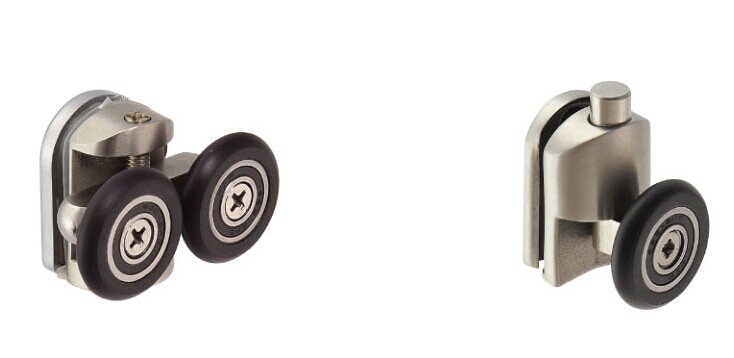
Polymer construction defines the modern Nylon Shower Roller. Engineers utilize high-density, self-lubricating nylon specifically designed for low-friction kinetic movement. This material glides effortlessly across aluminum and stainless steel tracks, providing a fluid user experience. The molecular structure of industrial nylon allows it to shed water and resist the buildup of soap scum better than porous materials.
Shore hardness optimization dictates nylon's success in sliding door applications. Rigid nylon serves as the ideal middle ground in material science. It is hard enough to resist the severe deformation often seen in softer silicone or rubber rollers under heavy loads. Yet, it remains forgiving enough to absorb minor track vibrations and imperfections. This balance prevents the wheel from flattening out while maintaining a smooth roll over minor calcium deposits.
Moisture immunity gives nylon a distinct advantage. The polymer features inherent resistance to water penetration. This completely eliminates the risk of surface rust on the wheel itself. Unlike metal alternatives, the outer tire of a nylon wheel will never oxidize, flake, or corrode, regardless of the water's mineral content or salinity. This makes it highly reliable for the outer contact surface.
Acoustic dampening stands out as a primary benefit. Nylon operates significantly quieter than metal. The polymer absorbs vibration rather than transmitting it through the glass and track. This eliminates the harsh, metal-on-metal grinding noise that often plagues older shower enclosures. For en-suite bathrooms, this silent operation is a major functional upgrade.
Track preservation is another major advantage. Nylon is highly forgiving on softer aluminum tracks. Over years of use, metal wheels can gouge and wear down the track channels, creating deep grooves that ruin the sliding mechanism. Nylon wheels protect the track infrastructure, extending the life of the entire shower enclosure and preventing extensive track replacement projects.
Despite its benefits, nylon carries specific deformation risks. The material is susceptible to flat-spotting or structural warping under excessive, sustained weight. If the nylon is not reinforced with an internal bearing, or if the glass door is oversized and exceptionally heavy, the static load can permanently deform the wheel's circular profile. A flat-spotted wheel will cause the door to bump and jump during operation.
Thermal sensitivity also presents a minor risk. Nylon can experience accelerated wear if exposed to extreme temperature fluctuations. Furthermore, highly abrasive chemical cleaners containing strong solvents can degrade the polymer over time. If exposed to harsh bleach or ammonia-based cleaners daily, the nylon can become brittle and eventually crack under the pressure of the glass weight.
Tensile strength is the defining characteristic of a Stainless Steel Shower Roller. The material offers exceptional rigidity and structural integrity, designed specifically for maximum load support without deformation. Steel is a significantly harder material than nylon, ensuring extreme durability under heavy static loads. It will not compress, warp, or change shape regardless of how much weight is suspended from it.
Alloy grading dictates the success or failure of steel in a wet environment. It is mandatory to use 304 or 316-grade stainless steel. These specific marine-grade alloys provide adequate chromium oxide layers. This passive layer protects the underlying steel from oxidation, allowing it to survive the harsh, chemical-heavy shower environment without rusting. Lower grades of steel lack this protection and will fail rapidly.
Exceptional durability makes steel a popular choice for heavy-duty commercial applications. Stainless steel wheels are completely impervious to flat-spotting. They maintain a perfect circular profile even under the heaviest frameless glass panels, ensuring consistent alignment over decades of use. You will never experience the bumping sensation associated with deformed polymer wheels.
Structural safety is unmatched. Steel provides the highest margin of safety against wheel breakage. When suspending 60-pound glass panels, the rigidity of steel ensures the doors remain securely on their tracks. There is virtually no risk of a solid steel wheel cracking or shattering under standard operational stress, making it the go-to choice for oversized custom enclosures.
Progressive acoustic degradation is the most noticeable drawback. Steel generates more noise initially than nylon. This noise becomes progressively louder and harsher as the steel wears. If the aluminum tracks are unlubricated, slightly misaligned, or coated in hard water scale, the metal-on-metal contact creates a loud, grinding acoustic profile that reverberates through the bathroom.
Corrosion vulnerability remains a reality if inferior materials are used. Despite the name, lower-grade stainless steel will inevitably rust. If the protective chromium layer is scratched by track debris, oxidation will set in. Once rust forms, the bearing will seize, particularly in high-salinity coastal homes. A seized steel wheel will act like a chisel, scraping away the aluminum track every time the door is opened.
Vibration transfer dictates the acoustic experience of a sliding door. Nylon acts as a natural shock absorber. It glides over minor track imperfections, resulting in a silent, smooth operation. Steel, conversely, transfers track imperfections directly into acoustic noise. Every bump or calcium deposit on the track reverberates through the metal wheel and into the glass panel. This noise profile worsens over the product's lifespan as the track wears down.
Environmental survivability depends heavily on material chemistry. Nylon wheels cannot rust. However, their true lifespan is dictated by their internal bearings. If a nylon wheel houses a standard carbon steel bearing, the unit will still fail when the inside rusts. Stainless steel requires rigorous maintenance of its passive layer. If harsh chemicals strip the chromium oxide, pitting and rust will destroy the wheel. Lifespan is highly dependent on the quality of the internal sealed bearing rather than just the outer wheel material.
Load distribution is critical for heavy frameless doors. Steel outperforms nylon in sheer load-bearing capacity. It prevents door sagging and ensures perfect alignment over decades of use. Nylon can compress under extreme weight, leading to a sluggish glide and alignment issues. Stainless steel is mandatory for oversized, thick-glass commercial or luxury residential enclosures where weight exceeds standard parameters.
Friction profiles determine how the roller interacts with the track. Short Track Stainless Steel Shower Rollers require precise alignment and pristine tracks to operate smoothly. Any deviation causes grinding. Nylon is significantly more forgiving. It adapts better to warped, older, or scaled tracks without causing further damage to the aluminum infrastructure.
Performance Metric | Pure Nylon Rollers | Solid Stainless Steel Rollers | Hybrid (Nylon on Steel) |
|---|---|---|---|
Acoustic Profile | Silent, absorbs track vibration | Loud, transfers track vibration | Silent, smooth operation |
Track Wear Impact | Minimal to none | High risk of gouging aluminum | Protects aluminum tracks |
Static Load Capacity | Moderate (can flat-spot over time) | Maximum (impervious to deformation) | High (steel core supports weight) |
Corrosion Resistance | Outer wheel immune to rust | Requires 304/316 grade to prevent rust | Highly resistant with sealed bearings |
Ideal Application | Lightweight framed doors | Oversized commercial glass panels | Standard residential frameless doors |
The industry has largely moved toward composite construction to solve the material debate. Premium manufacturers integrate thick Nylon Shower Roller Wheels over a marine-grade stainless steel stem and a sealed micro-bearing. This hybrid design leverages the strengths of both materials while neutralizing their respective weaknesses. The outer tire handles the kinetic friction, while the inner core handles the static load.
This approach delivers the best of both worlds. You achieve the quiet, track-friendly glide of a nylon outer tire. Simultaneously, you benefit from the rigid, rust-resistant structural support of a solid steel core. The internal steel bearing handles the heavy static load of the glass, preventing the nylon from flat-spotting. Meanwhile, the nylon exterior protects the aluminum track from metal-on-metal gouging. This combination effectively eliminates hinge wear, minimizes acoustic noise, and maximizes the overall lifespan of the hardware.
Initial material selection dictates the long-term maintenance schedule of the enclosure. Entry-level nylon kits with standard steel bearings are common, but they often require replacement within a year due to internal rust. Conversely, high-grade, solid stainless steel rollers require a larger initial investment due to raw material costs and machining requirements. Hybrid models sit in the middle, offering a balanced initial investment with superior longevity.
Replacement frequency dictates the true value of the hardware. Investing in better materials upfront yields a much higher return on investment by saving hours of future labor. Entry-level rollers fail quickly due to rusted bearings or cracked wheels. Sourcing 304-stainless/nylon hybrid rollers helps you avoid a frustrating secondary replacement project just a few years down the line. The labor time required to remove heavy glass doors far outweighs the cost of the rollers themselves.
Track degradation is a hidden danger of installing solid steel rollers on soft aluminum tracks. If a seized steel wheel gouges an expensive aluminum shower track beyond repair, you cannot simply replace the roller. You will necessitate a full enclosure replacement, turning a minor hardware swap into a major renovation project. Using nylon-coated wheels acts as an insurance policy for your track infrastructure.
Dimensional precision is the most critical step in hardware replacement. You cannot guess the size of a shower roller. Always use digital calipers for hardware measurement. Tape measures lack the necessary precision. You must match the wheel diameter exactly. Common sizes include 19mm, 23mm, 25mm, and 26mm. Even a 1mm difference will change how the door hangs in the track.
You must also measure the glass hole diameter precisely. A 2mm discrepancy in wheel size or stem thickness will cause track binding or prevent installation entirely. If the wheel is too small, the door will sag and drag on the bottom track guide. If the wheel is too large, it will not fit into the upper channel, making it impossible to hang the door.
Torque management prevents catastrophic installation failures. When securing the roller through the glass panel, you must apply correct pressure. Overtightening the mounting screw can easily crack or shatter the tempered glass. You must utilize the provided rubber gaskets properly. These gaskets sit between the metal hardware and the glass, absorbing the clamping force and preventing stress fractures during operation.
Lubrication protocols dictate the long-term survival of the bearing. Avoid petroleum-based lubricants entirely. Products like standard WD-40 degrade nylon polymers and attract dirt, creating a sticky paste that destroys bearings. Instead, utilize dry PTFE or silicone-based sprays. These dry lubricants maintain the bearing seals, repel water, and keep the track slick without attracting abrasive debris.
Pure stainless steel wheels are often overkill for standard residential doors and carry a high risk of track damage. Conversely, entry-level pure nylon rollers with inferior bearings will fail rapidly under heavy loads. The optimal choice for the vast majority of applications is a hybrid design: a thick nylon wheel encasing a 304-stainless steel sealed bearing and stem. This configuration ensures a silent glide, protects the aluminum track, and provides the structural integrity needed for heavy tempered glass.
Remove one existing roller from your shower door to use as a physical reference.
Measure the exact outer wheel diameter and the glass hole diameter using digital calipers.
Inspect your aluminum track for deep gouges or severe hard water scaling, cleaning it thoroughly before installing new hardware.
Source a marine-grade hybrid replacement kit that matches your exact caliper measurements.
Install the new rollers using the provided rubber gaskets, applying moderate torque to avoid fracturing the tempered glass.
A: Nylon rollers excel at noise reduction and track preservation. They glide silently and will not gouge soft aluminum tracks. Metal rollers offer higher load-bearing capacity but can be noisy. The most effective solution is a hybrid: a nylon outer wheel paired with a stainless steel internal bearing.
A: High-quality 304 or 316 marine-grade stainless steel rollers can last over a decade if properly maintained. Lower-grade steel will rust and seize within a year or two in a high-moisture, chemical-heavy shower environment.
A: Yes, you can switch materials as long as the wheel diameter and glass hole measurements match exactly. Switching to nylon is highly recommended if your current steel rollers are excessively noisy or are causing visible wear to your aluminum tracks.
A: Prevent rust by installing 304 or 316-grade stainless steel hardware. Maintain them by rinsing away harsh chemical cleaners and hard water after use. Apply a dry PTFE or silicone-based spray lubricant to the bearings twice a year to repel moisture.
A: Use a dry PTFE spray or a dedicated silicone lubricant. Never use petroleum-based products or heavy greases. Petroleum degrades nylon and rubber seals, while heavy grease attracts dust and soap scum, which eventually destroys the internal bearing.
A: You must remove an existing roller and measure it with digital calipers. Measure the exact outer diameter of the wheel and the diameter of the hole drilled through the glass panel. Both measurements must match your replacement hardware exactly to ensure proper fitment.


