

Views: 0 Author: Site Editor Publish Time: 2026-09-22 Origin: Site


Water mitigation remains a persistent challenge in residential and commercial bathrooms. Premature seal failure often leads to severe structural water damage. Mold remediation efforts escalate quickly when moisture escapes the wet zone. Compromised aesthetics ruin the design of premium spaces. Standardizing on the wrong type of barrier results in frequent replacement cycles. It increases maintenance overhead significantly. It also creates a poor user experience, particularly in frameless glass enclosures. We must evaluate better solutions to protect bathroom infrastructure. This guide introduces a comprehensive comparative analysis. We look at the traditional friction-fit barrier versus the engineered magnetic shower seal. You will learn how to evaluate which solution aligns with specific project requirements. We cover longevity goals, operational environments, and installation precision. By understanding the mechanical differences, you can make informed decisions that prevent leaks, reduce maintenance, and elevate the overall bathroom experience.
Water escapes poorly sealed enclosures easily. It damages drywall, rots subfloors, and ruins expensive baseboards. Hard water stains etch into adjacent bathroom fixtures, causing permanent cosmetic damage. Slip hazards increase liability in high-traffic hospitality environments. You need a reliable glass shower door seal to prevent these cascading effects. We establish strict baseline success metrics for these barriers. They must deliver zero-leakage under direct spray from modern showerheads. They should offer minimal aesthetic intrusion to maintain the frameless look. They must also resist biological growth like mold and mildew, which thrive in damp crevices.
Failing to meet these success criteria results in continuous repair cycles. Maintenance teams spend excessive hours addressing water damage that a proper barrier would have prevented. The impact of inadequate water mitigation extends far beyond the plastic strip itself. It encompasses drywall repair, tile regrouting, and potential structural interventions. When water breaches the threshold, it travels along grout lines and penetrates unsealed floor joints. This hidden moisture accumulation rots wooden joists over time. Contractors frequently encounter severe subfloor degradation simply because a bottom sweep failed months prior and went unnoticed by the property owner.
Usage frequency dictates durability requirements. High-turnover hospitality bathrooms see heavy daily use. Standard residential bathrooms experience less mechanical stress. You must choose a barrier built specifically for the intended environment. Hard water causes severe operational issues. Mineral buildup calcifies flexible plastics over time. Cleaning chemicals degrade material integrity, stripping away essential plasticizers. A standard shower seal often fails prematurely under these harsh conditions.
You must also consider the ambient humidity and ventilation of the space. Poorly ventilated bathrooms accelerate the degradation of standard plastics. The constant presence of moisture encourages bacterial growth inside the friction fins. Evaluating these environmental factors helps you determine the necessary chemical resistance and mechanical durability required for your specific project. In commercial gyms or spa facilities, the ambient moisture never fully dissipates. These environments demand industrial-grade extrusions that resist continuous vapor exposure. Commercial cleaning crews often use harsh quaternary ammonium compounds that destroy standard residential-grade plastics within weeks.
Premium bathroom builds require more than just basic water retention. Thermal retention matters immensely. Blocking cold drafts improves user comfort significantly during a shower. Acoustic dampening is another frequently overlooked factor. Heavy glass doors closing against hard tile create loud, unpleasant noises. Proper barriers absorb this impact force. They muffle sound and keep warm air trapped inside the enclosure. This sets the stage for our performance comparisons between different sealing technologies.
When a door closes with a harsh clatter, it diminishes the perceived quality of the entire bathroom. Acoustic insulation transforms a standard shower into a luxury experience. The right barrier mitigates the harsh sounds of glass striking glass or metal. It provides a soft, secure landing that enhances the overall sensory experience of the space. We often see high-end builds fail client expectations simply because the door closure sounds cheap and hollow. Steam showers, in particular, require absolute perfection in the barrier to prevent steam from escaping and triggering fire alarms or peeling paint off the bathroom ceiling.
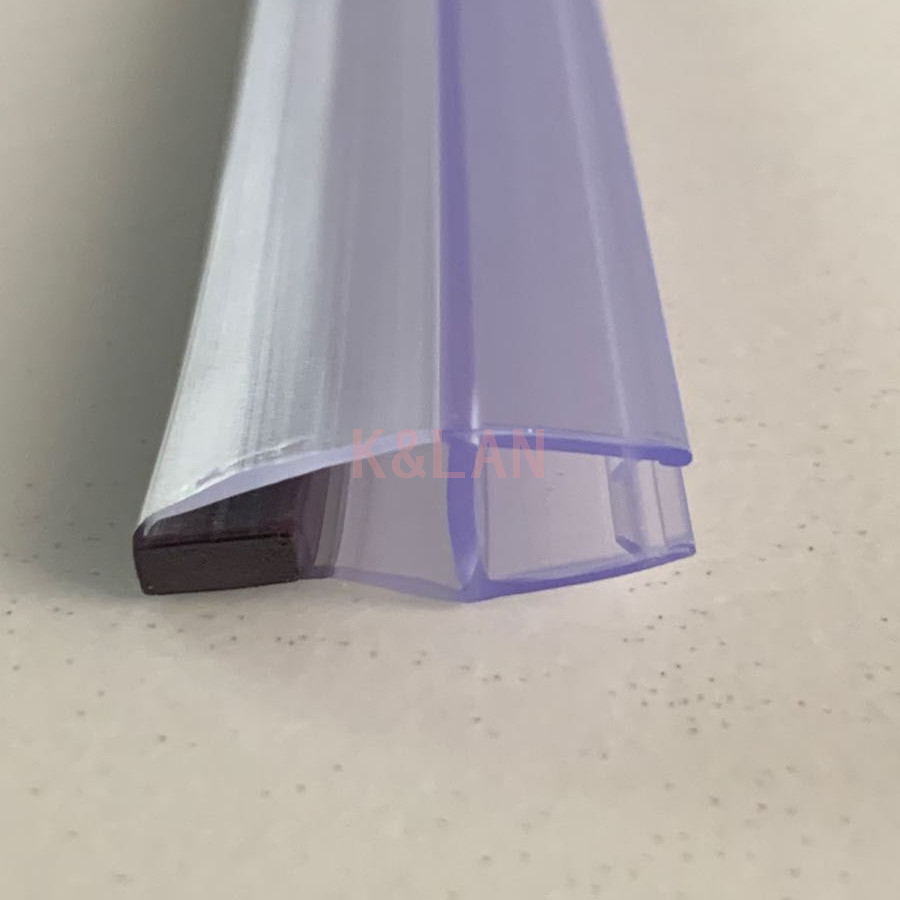
Manufacturers typically construct a traditional PVC shower door seal using dual-durometer plastics. They combine a rigid channel for gripping the glass with soft, flexible fins for blocking water. Polycarbonate alternatives offer similar structures with slightly higher rigidity. They rely entirely on a friction-based sealing mechanism. Fins, bulbs, and sweeps physically bridge the gaps between glass panels. They drag against adjacent surfaces to block water from escaping the wet zone.
These traditional strips simply push onto the edge of the glass. The rigid U-channel uses tension to stay in place. Installers rarely need adhesives or specialized tools to mount them. This simplicity makes them highly popular for quick fixes and renovations. However, this simple application method also contributes to their inherent operational weaknesses. The lack of mechanical fastening means the strip can slowly walk down the glass over time, eventually dragging heavily on the shower pan and tearing the bottom fin completely off the rigid housing.
Friction causes rapid mechanical wear. Repetitive dragging against glass or textured tile shreds soft plastic fins. Material fatigue sets in quickly under normal daily use. UV exposure from bathroom windows and harsh cleaning chemicals cause severe yellowing. The plasticizers leach out of the PVC, leaving the material hard and brittle. Eventual tearing of the sealing fins is inevitable. Once the fins tear, the barrier completely loses its ability to retain water.
Frequent disposal and replacement of degraded PVC strips carry high environmental and operational burdens. Maintenance teams spend excessive hours swapping out failed strips across large properties. The constant cycle of degradation and replacement frustrates property managers and homeowners alike. The passive nature of the friction seal simply cannot withstand long-term mechanical abuse. We regularly observe bottom sweeps completely detached from their rigid housings within twelve months of installation in busy households. The failure mechanism is almost always the same: the flex point where the soft fin meets the rigid channel simply snaps after thousands of bending cycles.
A magnetic shower door seal operates on a fundamentally different principle. It uses continuous magnetic strips housed within a rigid or semi-rigid PVC profile. This creates an active closure technology. The magnets pull toward each other as the door approaches the strike panel. This snap engagement creates a continuous, watertight, and airtight barrier. It does not rely solely on physical overlap or friction. The active pull ensures a tight seal every time the door closes.
This active engagement eliminates the need for flexible fins to drag across rough surfaces. The magnetic attraction does the work of holding the panels together tightly. Because the surfaces meet flush rather than scraping past one another, mechanical wear drops significantly. The rigid housing protects the internal magnets from direct exposure to water and cleaning chemicals. This internal protection prevents the magnets from rusting or degrading, ensuring consistent pulling force year after year. The magnetic field lines actively pull the two profiles together, crushing any small water droplets and breaking the surface tension that usually allows water to wick through passive gaps.
These systems require precise polarity and alignment engineering. You must use paired profiles to achieve the correct magnetic pull. Options include 90-degree, 135-degree, or 180-degree alignments. These match specific door configurations perfectly. You cannot mix and match random strips; the polarity must align to attract rather than repel. This engineering ensures the door stops exactly where intended.
The magnetic force provides an unexpected structural benefit. It compensates for minor structural settling. It also handles slight glass bowing over time. The magnets reach across small variances to maintain the watertight bond. If a heavy glass door sags by a millimeter, the magnetic field still engages, pulling the seal tight. A traditional friction fin would simply leave a gap in this scenario. Installers appreciate this forgiveness when working with large, heavy glass panels that inevitably shift slightly after the initial hanging. Tempered glass is rarely perfectly flat; it often has a slight bow from the manufacturing process. The magnetic pull forces the door to conform to the stationary panel, eliminating the gaps caused by this natural bowing.
Traditional sweeps provide a passive barrier. Water pressure can easily push past flexible fins. Magnetic systems offer an active, interlocking barrier. High-pressure showerheads and body jets easily defeat friction seals. Frameless enclosures demand the stronger resistance of magnetic closures. The interlocking channels block direct spray effectively. When water hits a magnetic closure, the rigid interlocking profiles force the water to drain downward rather than pushing through the gap.
We can observe the difference clearly in high-flow environments. A standard fin might deflect under the force of a multi-jet shower system. The magnetic connection holds firm. It maintains its structural integrity regardless of the water volume hitting it. This makes it the only logical choice for luxury showers featuring high-output fixtures. Water testing on job sites consistently shows friction seals weeping under direct spray, while magnetic pairs remain completely dry on the exterior face. The rigid PVC housing acts as a physical dam, while the magnetic core ensures the dam never breaches under pressure.
Hinged and pivot doors benefit greatly from magnetic systems. The magnets create a definitive stop. They prevent the door from swinging past the zero-point, which protects the hinges from overextension. Sliding doors present a different challenge. Traditional friction seals or specialized overlapping sweeps are often preferred here. Magnets can create too much drag on a sliding track, making the door difficult to open.
For inline doors, the magnetic strips pull the door perfectly flush with the stationary panel. For corner enclosures, the angled magnetic profiles ensure a crisp, clean corner joint. Neo-angle showers rely heavily on custom magnetic profiles to secure the complex angles without leaking. Attempting to use standard friction fins on a 135-degree neo-angle enclosure almost always results in a sloppy joint that leaks profusely during the first shower. The geometry of a neo-angle requires the positive stop that only a magnetic extrusion can provide.
Evaluate the replacement frequency carefully. Traditional seals often require annual replacement. They degrade quickly under normal use. Magnetic systems typically offer a multi-year lifespan. Reduced friction means less physical wear on the components. Assess the long-term maintenance requirements. The higher initial material grade of magnetic variants is easily justified. You achieve lower maintenance and replacement cycles over a five-to-ten-year horizon.
Consider the labor hours associated with continuous replacement. Paying a maintenance technician to replace standard strips every twelve months adds up quickly. Investing in a durable magnetic system eliminates this recurring labor requirement. Facility managers in large hotels prefer magnetic options specifically to reduce the number of work orders generated by leaking shower doors. The durability directly translates to fewer guest complaints and less downtime for the rooms. Maintenance logs consistently show that rooms equipped with magnetic closures require 80% fewer service calls related to bathroom water mitigation.
Consider the visual impact of your choice. Traditional clear seals look less obtrusive initially. However, they discolor and yellow rapidly, ruining the clean look of the glass. Magnetic systems often have a more defined, visible profile. Yet, they maintain their clean appearance much longer because the rigid PVC resists chemical degradation better. Note the tactile feedback. Users notice the perceived quality of a magnetic closure. The premium feel of the door snapping shut elevates the bathroom experience. Improved acoustic insulation adds to this high-end feel.
| Feature | Traditional Friction Seal | Magnetic Shower Seal |
|---|---|---|
| Closure Mechanism | Passive (Friction/Overlap) | Active (Magnetic Pull) |
| Lifespan | 1 - 2 Years | 3 - 5+ Years |
| Water Resistance | Moderate (Fails under high pressure) | Excellent (Interlocking barrier) |
| Acoustic Dampening | Low | High (Soft snap closure) |
| Installation Difficulty | Low (Push-on) | Medium (Requires precise gap alignment) |
Magnetic systems demand strict gap tolerances to function correctly. If the gap is too wide, you get weak magnetism. The door might pop open under water pressure. If it is too narrow, the door simply won't close. You must implement precise measurement protocols. Measure glass thickness accurately using digital calipers. Standard sizes include 6mm, 8mm, and 10mm. Measure the gap width at multiple points prior to ordering to account for out-of-plumb walls.
Do not guess your glass thickness. A profile designed for 8mm glass will not grip a 6mm panel securely. It will slide down over time. Conversely, trying to force a 6mm profile onto 8mm glass will crack the rigid PVC channel. Precision during the measurement phase prevents installation failures. We always recommend taking measurements at the top, middle, and bottom of the glass opening, as walls are rarely perfectly plumb. Zero your digital calipers before measuring, and ensure you are measuring the bare glass, not an existing piece of hardware or old adhesive residue.
Tooling differences matter significantly during installation. You can often cut traditional PVC with heavy shears or tin snips. Magnetic strips require much more care. You must use fine-tooth hacksaws or specialized snips. Improper cutting shatters the rigid channel. It can also demagnetize the edge or bend the internal magnet. Always remove the magnet insert before cutting the plastic housing.
Upgrading an existing enclosure presents unique complexities. Moving from a traditional barrier to a magnetic system changes door dynamics. Identify potential hinge adjustment requirements early. The new closing force might pull the door off its original center. Ensure the door rests at the correct zero-point after installation. You may need to loosen and realign heavy glass hinges to accommodate the new magnetic pull.
Sometimes, the existing gap between glass panels is too wide for a standard magnetic pair to bridge. In these cases, you might need to adjust the hinges to shift the door closer to the strike panel. Always support the weight of the glass with wooden shims when adjusting hinges to prevent catastrophic shattering. Never attempt to adjust frameless glass hinges without a second person holding the panel securely. You must loosen the Allen screws on the hinge block, shift the glass slightly, and retighten the screws to the manufacturer's specified torque settings.
Standard retail seals suffice for basic, temporary fixes. Complex projects require a custom magnetic shower seal. Non-standard angles demand specific extrusions. Oversized doors need heavy-duty magnets to hold the weight. Specific architectural finishes require custom housings. Matte black or brushed nickel profiles blend seamlessly with premium hardware, elevating the visual appeal of the entire bathroom.
Big-box retailers rarely carry the specific angles or glass thicknesses required for high-end frameless enclosures. They stock generic, one-size-fits-all solutions. Custom solutions ensure the barrier matches the exact geometry of your specific shower build, guaranteeing optimal performance and longevity. When working on custom glass enclosures, the hardware must match the exact specifications of the glass fabricator. Using generic parts on custom glass often voids the warranty provided by the glass installer.
Select your shower seal supplier carefully. Demand technical spec sheets before purchasing large quantities. Verify material certifications. Look for UV resistance and anti-yellowing compounds in the PVC formulation. Review the warranty terms thoroughly. Bulk availability is crucial for commercial procurement. Consistent polarity matching prevents installation nightmares on large-scale hospitality retrofits. Dedicated customer support resolves technical issues quickly.
A reputable supplier will provide detailed engineering drawings of their profiles. They will clearly state the gap tolerances and glass thickness compatibility. Do not purchase from vendors who cannot provide basic material data. The risk of receiving incompatible or rapidly degrading materials is simply too high. Always request physical samples to test the magnetic pull strength before committing to a large order for a multi-unit project. Testing the sample on-site allows you to verify that the magnetic field is strong enough to hold the specific weight of your glass doors.
A: A magnetic system typically lasts three to five years, while traditional friction seals usually fail within one to two years. The active magnetic closure eliminates the constant mechanical scraping that shreds flexible fins. The rigid PVC housing also resists chemical degradation and UV yellowing much better than soft plastics.
A: Yes, but it requires careful planning. You must purchase paired strips to ensure proper polarity. You also need to verify that your existing gap width falls within the strict tolerances required by the magnetic profiles. You may need to adjust your glass hinges to ensure the door rests at the correct zero-point.
A: Suppliers manufacture these profiles for standard industry glass thicknesses, primarily 6mm, 8mm, 10mm, and 12mm. The rigid U-channel is extruded specifically for each size to ensure a tight, secure grip without the need for messy adhesives. You must order the exact size for your glass.
A: Several factors cause this issue. The most common is reversed polarity, where the magnets repel instead of attract. Other causes include an incorrect gap size, severe mineral buildup blocking the connection, or misaligned hinges pulling the door off-center.
A: First, slide the magnetic strip out of the PVC channel. Mark your length and cut the rigid PVC housing using a fine-tooth hacksaw to prevent splintering. Score the magnetic strip with a utility knife and snap it cleanly. Finally, reinsert the magnet into the housing.
A: Avoid harsh abrasives or bleach. These chemicals strip the plasticizers, causing the material to harden and crack. Instead, use a mild soapy water solution or a mix of white vinegar and water. Scrub gently with a soft brush to remove mineral deposits and prevent mold growth.
A: Yes. Standard inline seals will not work on angled doors. Corner enclosures and neo-angle showers require specific extrusions. You must source these paired, angled profiles from specialized suppliers, as big-box retailers rarely carry these complex geometric configurations.


