

Views: 0 Author: Site Editor Publish Time: 2026-08-25 Origin: Site


The architectural appeal of a modern, minimalist bathroom relies heavily on seamless glass structures. However, the functional reality of water dynamics often challenges this aesthetic. Specifying a high-end glass enclosure without an equally rigorous evaluation of the sealing mechanism leads to inevitable water damage, mold proliferation, and compromised hardware longevity. Even enclosures less than a year old suffer severe leakage if paired with high-output shower systems without proper gap coverage. Bridging the gap between design intent and daily performance requires moving beyond generic hardware to specify precision-engineered seals. This guide breaks down the technical evaluation criteria for selecting the exact shower door seal required for long-term enclosure viability, whether for a new build or retrofitting a failing installation.
Aesthetic Preservation & Hygiene: The correct shower seal integrates invisibly into frameless designs while preventing the hard water buildup and mold risks that degrade visual appeal and bathroom hygiene.
Material Lifespan Dictates Value: Evaluating polycarbonate, vinyl, and silicone options based on UV resistance and structural memory prevents premature yellowing and brittleness.
Precision Tolerances Matter: Successful water containment in a frameless shower enclosure relies on matching the seal profile exactly to the glass thickness (e.g., 3/8" or 1/2") and gap dimensions.
Strategic Sourcing: Partnering with a specialized shower seal manufacturer for custom or high-tolerance extrusions mitigates the risks associated with off-the-shelf, one-size-fits-all alternatives.
Maintenance and Retrofitting: High-quality flange-fit seals eliminate the need for messy caulks or adhesives, allowing for seamless replacement and upgrades on existing enclosures.
A high-performance seal must achieve absolute water containment, acoustic dampening, and thermal retention without obstructing the frameless aesthetic. When you install a frameless shower enclosure, the glass panels naturally require functional gaps. These clearances allow heavy glass doors to swing freely on their hinges without binding against adjacent panels or tile. Without a proper physical barrier, these necessary clearances become direct pathways for water escape. The success of any installation depends entirely on closing these gaps invisibly. The chosen profile must grip the glass tightly, resist daily friction, and maintain structural integrity over thousands of door cycles. Field experience shows that a standard 3/8-inch glass door requires a gap tolerance of exactly 3/16 to 1/4 inch. If the profile fails to match this specific void, water will bypass the barrier immediately.
Modern bathrooms frequently feature multi-jet shower panels, high-flow rain heads, and heavy-duty handheld wands. These systems generate significant water pressure, often exceeding 60 PSI. They create complex, turbulent spray patterns that bounce off bodies and walls, inevitably striking the glass gaps. High-volume water egress requires specific deflection strategies rather than simple blockage. Water exploits capillary action to climb through tight spaces. A well-designed profile actively redirects water back into the wet zone. It utilizes angled fins and drip rails to manage heavy flow. Standard gaps are easily overwhelmed without these specific deflection mechanisms. You must account for the exact trajectory of the shower spray when selecting your profiles.
Shower System Type | Water Pressure Level | Primary Egress Risk | Recommended Deflection Strategy |
|---|---|---|---|
Standard Wall Mount | Low to Medium | Direct splash at threshold | Single-fin bottom sweep |
Overhead Rain Shower | Medium | Indirect pooling at base | Double-fin bottom sweep |
Multi-Jet Body Panel | High | Horizontal spray through hinges | Bulb side seals and drip rails |
High-Flow Handheld Wand | Very High | Targeted pressure on strike gaps | Magnetic closure profiles |
Mitigating water egress protects adjacent bathroom materials from catastrophic failure. Continuous leaks ruin drywall, rot wooden subflooring, and degrade custom tile grout over time. Hard water deposits etch into unprotected floor surfaces outside the shower pan, causing permanent staining. Furthermore, escaping moisture causes rapid corrosion on expensive brass or stainless steel hinges and tracks. A precise seal actively reduces mold risk by eliminating stagnant water traps where bacteria thrive. When water pools under a poorly fitted sweep, mold spores multiply rapidly within days. By directing all water back to the drain, you preserve the structural integrity of the entire room. Proper gap coverage extends the lifespan of the surrounding architecture significantly, preventing tear-outs and costly bathroom remodels.
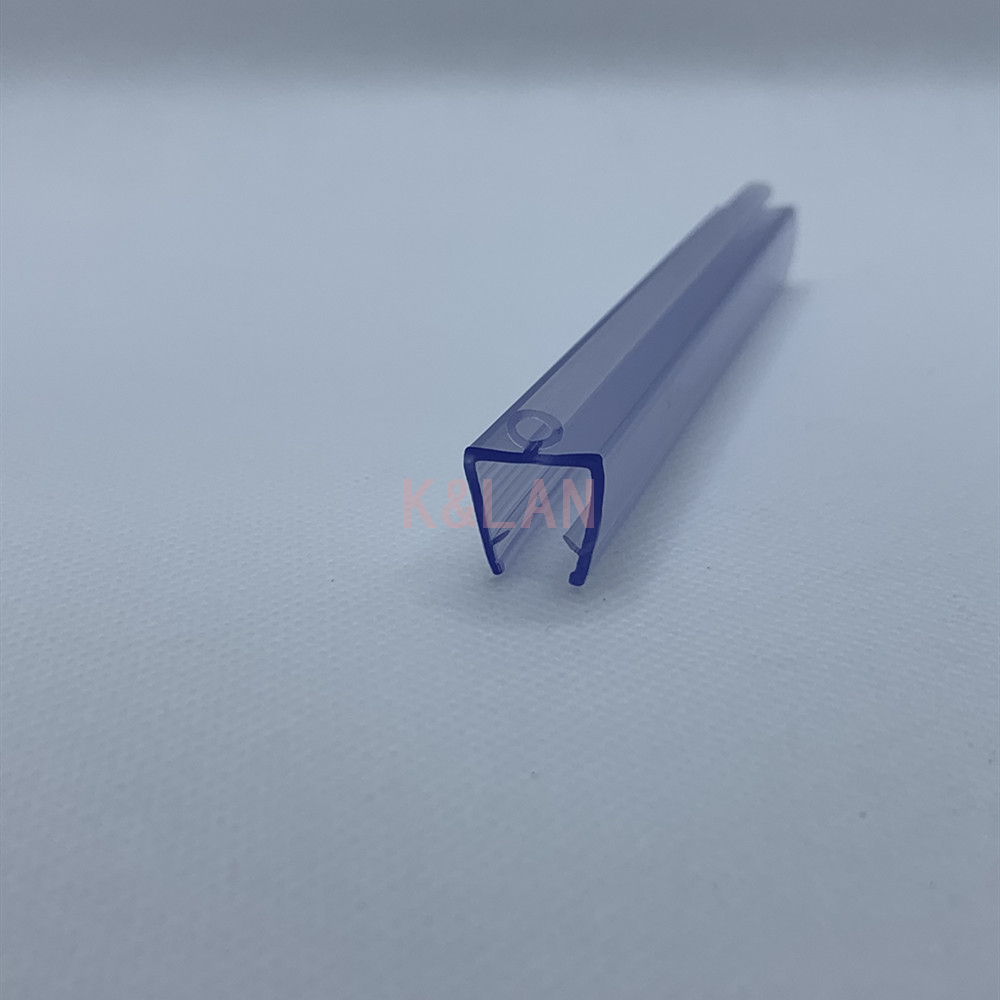
Different enclosure geometries require specific profiles. Side seals and bottom sweeps serve complementary roles as essential accessories for complete water management. A sweep mounts to the bottom edge of a moving door, managing the heaviest water pooling at the threshold. A side seal mounts vertically along the strike or hinge edges, handling splashing and indirect spray. You cannot substitute one for the other. Each extrusion is engineered for a specific orientation and friction load. Understanding these categories ensures you apply the correct physical barrier to each unique gap.
Bottom sweeps direct water back into the shower pan. They face the highest volume of standing water. The mechanics rely on flexible downward fins brushing against the threshold. You must evaluate the trade-offs between different configurations based on your floor slope and curb height.
Single-fin sweeps offer minimal friction for easy door operation on perfectly level curbs.
Double-fin sweeps provide a secondary barrier against heavy pooling and accommodate slight threshold variations.
Drip-rail combinations feature a rigid deflector shield above the fins to catch water running down the glass face.
Extended-length fins accommodate uneven natural stone tile or aggressively sloping curbs.
Low-profile sweeps work best with zero-threshold, ADA-compliant accessible showers.
A drip rail physically catches water running down the glass face and channels this runoff away from the bottom gap entirely. This combination is highly effective for high-output shower systems.
Hinge-side gaps require specialized attention because the door swing changes the geometry of the gap continuously. Bulb profiles absorb impact and accommodate this movement perfectly. The hollow bulb compresses as the door opens against a fixed panel, then expands to fill the void when closed. Strike-side sealing requires different shapes. We typically use "h" and "F" jamb profiles here. The "h" profile slips onto the fixed glass panel, and its extended leg creates a backstop for the moving door. The "F" profile often mounts to the wall, providing a soft landing pad for the glass edge. These shapes prevent the glass from striking hard surfaces while blocking spray.
Gap Location | Typical Gap Size | Recommended Profile Shape | Primary Function |
|---|---|---|---|
Bottom Threshold | 7/16" to 1/2" | Sweep with Drip Rail | Deflect heavy pooling water |
Hinge Side | 3/16" to 1/4" | Hollow Bulb Seal | Absorb swing compression |
Strike Side (Glass to Glass) | 1/8" to 3/16" | "h" Jamb Profile | Create a physical backstop |
Strike Side (Glass to Wall) | 3/16" to 5/16" | "F" Jamb Profile | Provide a soft wall landing |
Magnetic extrusions ensure a positive, watertight latch. They eliminate the need for mechanical hardware or metal catches. These profiles contain continuous magnetic strips encased in plastic. We use them extensively in double-door applications to pull the two moving panels together tightly. They also work well for specific single-door setups meeting a fixed panel. The magnetic attraction compresses the plastic fins slightly, creating an impenetrable barrier against high-pressure spray. They provide tactile feedback to the user, confirming the door is fully closed. This prevents accidental leaks caused by doors left slightly ajar by careless users.
You must assess the chemical and physical properties of common materials. These properties directly impact lifecycle costs and maintenance schedules. The bathroom environment is uniquely harsh. Materials face daily exposure to hot water, steam, and aggressive cleaning chemicals. They also endure constant mechanical flexing. Choosing the wrong polymer leads to rapid degradation. The material must retain its structural memory, bouncing back to its original shape after every door cycle. It must also resist chemical embrittlement. We evaluate options based on rigidity, clarity, and thermal stability.
Different polymers offer distinct advantages for specific applications. Polycarbonate provides excellent rigidity, ensuring a reliable snap-on fit that will not sag over time. Vinyl offers superior flexibility, allowing fins to sweep smoothly over textured tile. Silicone delivers extreme temperature and chemical resistance, remaining pliable even in heavily sanitized environments.
Material Type | Shore A Hardness | UV Resistance | Best Application |
|---|---|---|---|
Polycarbonate | 80 - 90 (Rigid) | High (with inhibitors) | Rigid channels and drip rails |
Vinyl (PVC) | 60 - 75 (Flexible) | Medium | Bottom sweeps and soft fins |
Silicone | 40 - 50 (Very Soft) | Excellent | Bulb seals and extreme environments |
Co-extruded (Poly/Vinyl) | Variable | High | Premium all-in-one profiles |
Co-extruded profiles represent the industry standard for premium installations. They fuse a rigid polycarbonate spine with soft vinyl fins. This delivers the best characteristics of both materials in a single extrusion.
Clear plastics often turn yellow over time. This is a common failure point that ruins the frameless aesthetic. Ambient sunlight and fluorescent bathroom lighting emit UV radiation. This radiation breaks down the polymer chains in cheap plastics. High-grade extrusions utilize advanced UV inhibitors. These chemical additives absorb and dissipate UV energy. Material purity also plays a major role. Contaminants in recycled plastics accelerate the yellowing process. Specifying virgin materials with integrated UV protection prevents this aesthetic degradation. Your profiles will remain crystal clear for years, maintaining the invisible look of the enclosure.
Friction-fit (flange) profiles are the undisputed industry standard. They grip the glass using mechanical tension. Pre-applied adhesive tapes and caulks introduce unnecessary complications. Users often experience confusion regarding installation methods. Flange-fit mechanisms eliminate the need for messy caulks entirely. They slide directly onto the glass edge, allowing for seamless DIY replacement. When an adhesive fails, it leaves a stubborn residue on the glass. Scraping this residue risks scratching the expensive panels. Friction-fit designs pull off cleanly in seconds. They accommodate slight variations in glass thickness naturally. They represent a cleaner, faster, and more reliable implementation strategy.
Large-scale hospitality projects require rigorous vendor evaluation. High-end residential builds demand absolute perfection. You must select a partner capable of meeting these distinct needs. A reliable shower seal manufacturer provides consistent inventory for phased rollouts. They ensure batch-to-batch consistency across thousands of units. Compliance with safety and environmental standards is non-negotiable. The plastics must not off-gas harmful VOCs in a hot, steamy bathroom. The manufacturer must provide detailed technical data sheets verifying the physical properties of the extrusions. Scalability ensures your project avoids costly delays caused by backordered components.
Standard extrusions handle most typical installations. However, unique architectural challenges require specialized solutions. Out-of-plumb walls create uneven gaps that standard fins cannot reach. Non-standard glass thicknesses require modified grip channels. Unique door sweeps are necessary for custom floor slopes. In these scenarios, standard options fail completely. Commissioning a custom shower seal guarantees exact architectural tolerances. The return on investment for custom extrusions is significant. It prevents water damage callbacks and unsatisfied clients. You can specify the exact fin length, bulb diameter, and material blend required for your specific gap dynamics.
Manufacturing precision separates premium profiles from cheap alternatives. The grip channel must match the glass thickness with micro-millimeter accuracy. If the channel is too wide, the profile slips off. If it is too narrow, it requires excessive force to install, risking glass damage. Look for manufacturer ISO certifications indicating strict quality control processes. Extrusion consistency ensures the profile maintains its shape along its entire length. Batch-to-batch clarity matching is also vital. If you order replacement parts two years later, they must match the optical clarity of the original installation perfectly.
Even the highest-quality materials fail if implemented poorly. Physical variables constantly compromise the installation. Temperature fluctuations cause the glass and surrounding tile to expand and contract. Daily usage introduces unpredictable friction loads. Users may push doors past their intended swing radius. Heavy mineral content in the local water supply accelerates wear on flexible fins. You must anticipate these implementation risks during the design phase. Selecting robust profiles and educating end-users mitigates these uncontrollable variables significantly.
Improper hardware alignment destroys extrusions rapidly. If hinges sag, the glass drops closer to the threshold. This forces the bottom sweep to bear structural loads it was never designed for. The soft fins crush and tear under the weight of the door. Out-of-square glass installation creates similar problems. The gap may be tight at the top and wide at the bottom. A standard vertical profile cannot bridge this uneven void effectively. A properly installed glass shower door maintains perfectly parallel gaps. You must correct hinge sagging and out-of-plumb panels before applying new extrusions. The plastic barrier is a water shield, not a structural wedge.
Proper installation techniques extend the lifespan of the product dramatically. You must prepare the glass and handle the plastics with care.
Clean the glass edge thoroughly with isopropyl alcohol to remove soap scum and oils.
Measure the glass edge twice before making any cuts to the extrusion.
Use miter shears or a fine-tooth hacksaw to cut the plastic to prevent micro-fracturing the rigid spine.
File down any sharp edges on the cut plastic to prevent scratching the glass during application.
Start pressing the profile onto the glass from the bottom up, applying even pressure.
Account for door swing clearances to ensure the fins do not bind against the hinges or wall brackets.
Never use a hammer or hard tool to force the profile onto the glass. If it requires excessive force, you have selected the wrong channel size for your glass thickness.
Failure Symptom | Root Cause | Field Solution |
|---|---|---|
Fins tearing off sweep | Hinge sagging causing door drop | Re-align hinges, replace sweep |
Profile sliding down glass | Channel too wide for glass | Order correct thickness profile |
Yellowing or cloudiness | UV damage or harsh chemicals | Replace with UV-inhibited material |
Water escaping at hinge | Bulb seal too small for gap | Install larger diameter bulb profile |
Diagnosing leaks on existing enclosures requires careful observation. Turn on the shower and watch where the water escapes. Identify whether the failure is at the threshold, the hinge, or the strike side. Remove the old, degraded plastics carefully. Measure the bare glass thickness using digital calipers. Then, measure the exact width of the gap between the glass and the adjacent surface. You must match the new profile to the specific gap dynamics of the current hardware. A high-quality replacement shower seal instantly revitalizes an old enclosure. It restores water containment without requiring expensive hardware adjustments.
Realistic cleaning schedules maintain material integrity. Harsh bathroom chemicals destroy polymers quickly. Bleach and ammonia strip the plasticizers from vinyl, causing the fins to become brittle and snap off. Abrasive scouring pads scratch the clear surfaces, making them look cloudy and dirty. Recommend safe alternatives to your clients. Mild dish soap and warm water clean the plastics effectively. White vinegar dissolves hard water spots without degrading the polymer chains. Wipe down the profiles weekly with a soft microfiber cloth. Proper maintenance prevents premature yellowing and ensures the fins remain flexible for years.
Measure your exact glass thickness using digital calipers to ensure a perfect friction fit for replacement parts.
Evaluate your current gap dimensions and floor slope to determine the necessary fin length and profile shape.
Request material samples from a specialized manufacturer to verify optical clarity and rigidity before placing a bulk order.
Inspect your glass hinges for sagging and correct any out-of-plumb alignment before installing new profiles.
A: High-quality polycarbonate and vinyl extrusions typically last between two to five years. Lifespan depends heavily on water hardness, cleaning routines, and daily usage. Using mild cleaners and wiping down the enclosure regularly extends their functional life significantly.
A: Yes. Friction-fit profiles slide or snap directly onto the edge of the glass while the door remains on its hinges. You simply pull the old extrusion off, clean the glass edge, and press the new one into place.
A: A sweep mounts horizontally to the bottom of a moving door to block water from escaping over the threshold. A side seal mounts vertically along the door's edges to close the gaps between the glass and walls or other panels.
A: Always use a snap-on friction-fit profile for moving frameless doors. Caulk is messy, degrades quickly on moving parts, and leaves a stubborn residue. Snap-on extrusions provide a clean, secure fit and allow for easy replacement.
A: Install a bottom sweep equipped with a rigid drip rail and flexible double fins. The drip rail deflects the heavy water volume running down the glass, while the double fins create a secondary barrier against pooling water at the threshold.
A: Clear plastics turn yellow due to UV radiation exposure and chemical degradation from harsh cleaners. Prevent this by specifying high-grade materials with built-in UV inhibitors and cleaning them only with mild, non-abrasive solutions like dish soap or vinegar.


